Gear Tooth Couplings
Rokee is Gear Tooth Couplings Manufacturer, Customizable according to the gear tooth couplings drawings provided by the customer, Support Export.
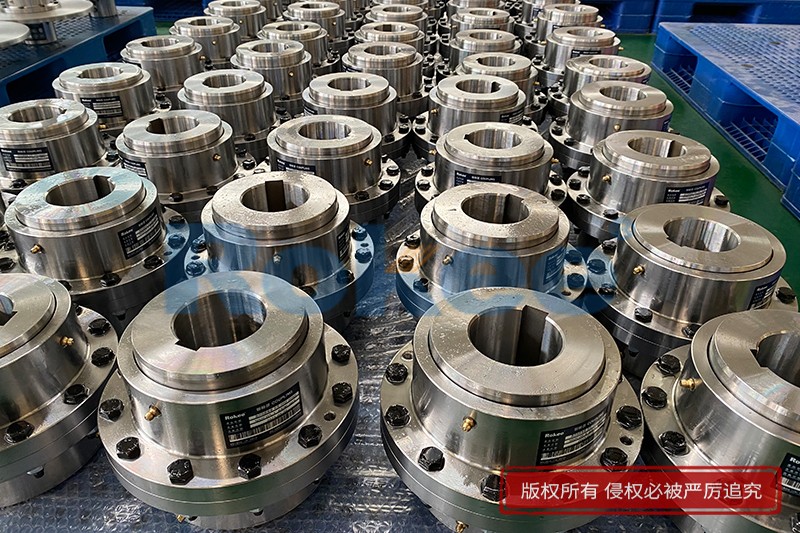
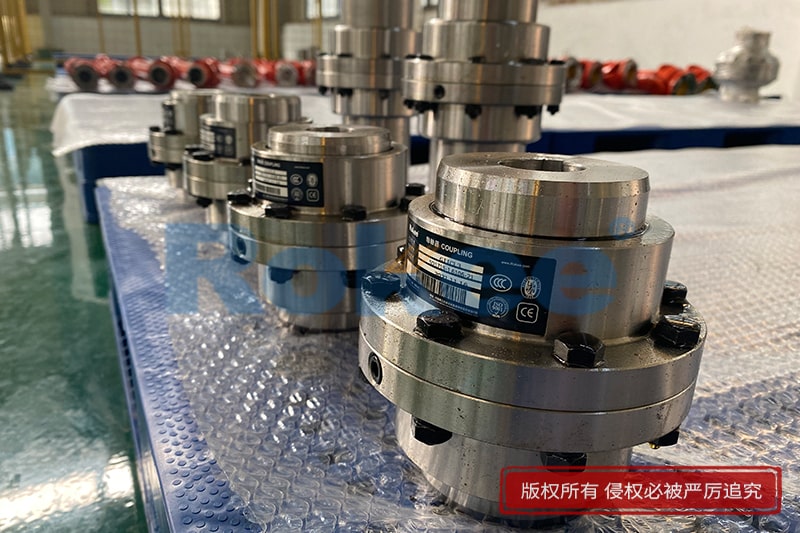
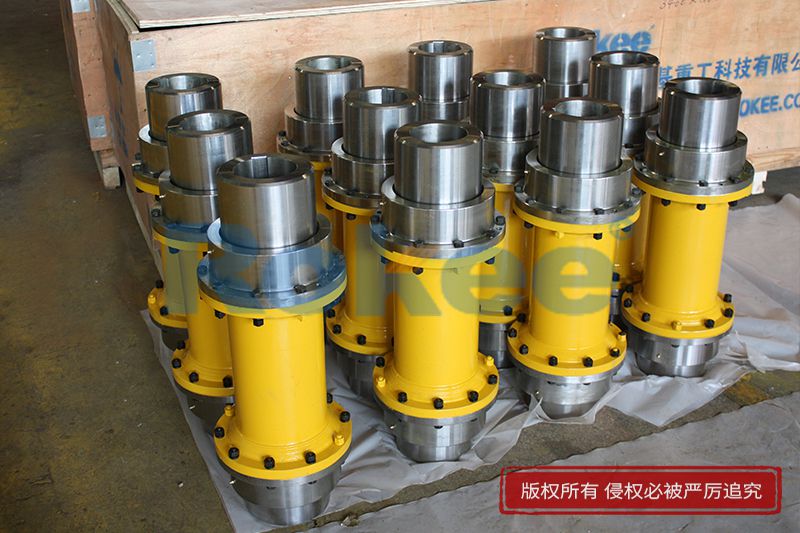
Gear Tooth Coupling can be applied into various general drive sites. Due to the special hook face drum gear design, in the definitive deviation scope, Gear Tooth Coupling can effectively avoid the edge stress concentration at tooth meshing, so Gear Tooth Coupling has outstanding radial and angular centering capacity. Moreover, Gear Tooth Coupling can ensure long service life.
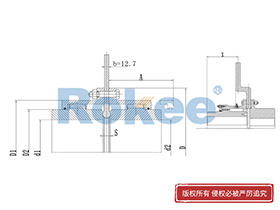
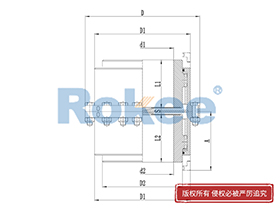
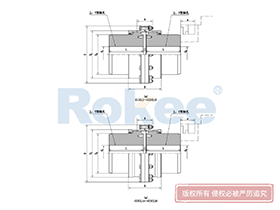
![RODX Drum Gear Coupling,Gear Tooth Couplings]()
RODX Drum Gear Coupling
Intermediate Connecting Shaft
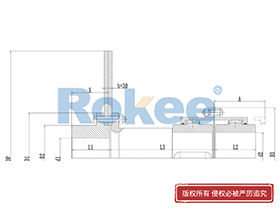
RODX Drum Gear Coupling is an extended type of ROD series coupling with a floating shaft design in the middle, suitable for increasing transmission distance.View More![RODP Drum Gear Coupling,Gear Tooth Couplings]()
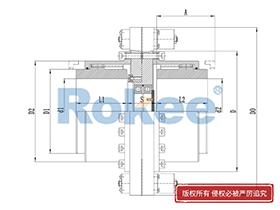
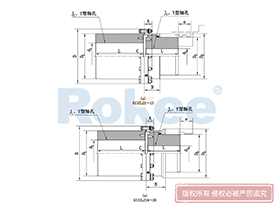
RODP Drum Gear Coupling
With Brake Discs
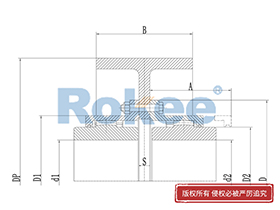
The RODP Drum Gear Coupling is a type of ROD series coupling with a brake disc, suitable for transmission situations where braking needs to be used in conjunction with disc brakes.View More![RODF Drum Gear Coupling,Gear Tooth Couplings]()
RODF Drum Gear Coupling
Split Type, Brake Disc
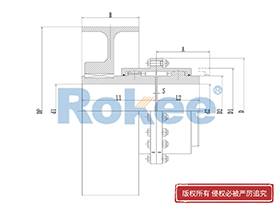
The RODF Drum Gear Coupling is a type of ROD series coupling with split brake discs, suitable for transmission situations where there is braking demand and the braking position changes when used in conjunction with disc brakes.View More![RODW Drum Gear Coupling,Gear Tooth Couplings]()
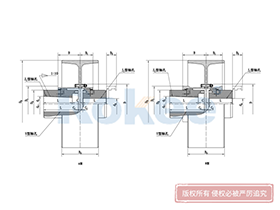
RODW Drum Gear Coupling
With Brake Wheel
The RODW Drum Gear Coupling is a type of ROD series coupling with brake wheels, suitable for transmission situations where braking needs to be used in conjunction with wheel brakes.View More![RODU Drum Gear Coupling,Gear Tooth Couplings]()
RODU Drum Gear Coupling
With Brake Wheel
The RODU Drum Gear Coupling is another type of ROD series coupling with brake wheels, suitable for transmission situations where braking needs to be used in conjunction with wheel brakes and applied to one end of the axle, achieving smoother and more reliable braking performance.View More![RODV Drum Gear Coupling,Gear Tooth Couplings]()
RODV Drum Gear Coupling
Vertical Installation
The RODV Drum Gear Coupling is a vertical installation type of the ROD series coupling, suitable for transmission situations that require vertical transmission torque.View More![RODM Drum Gear Coupling,Gear Tooth Couplings]()
RODM Drum Gear Coupling
Torsion Protection
The RODM Drum Gear Coupling is a torque setting form of the ROD series coupling. By adjusting relevant components, the maximum transmission torque can be easily set within a certain range. Suitable for shafting transmission situations that require safe torque operation to protect important machine components from excessive damage.View More![GICL Drum Gear Coupling,Gear Tooth Couplings]()
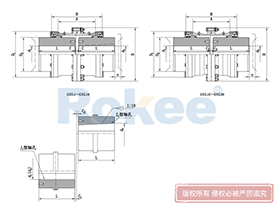
GICL Drum Gear Coupling
Wide
GICL Drum Gear Coupling has larger inner teeth width, which can transfer torque while compensating for larger axial displacement.View More![GICLZ Drum Gear Coupling,Gear Tooth Couplings]()
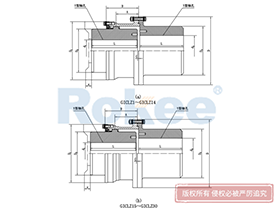
GICLZ Drum Gear Coupling
Connected to Intermediate Shaft
Half of the GICLZ Drum Gear Coupling adopts a non-toothed semi-coupling sleeve structure, which is usually connected in pairs or used in occasions with small angular displacement.View More![GIICL Drum Gear Coupling,Gear Tooth Couplings]()
GIICL Drum Gear Coupling
Narrow
GIICL Drum Gear Coupling has small inner teeth width, which can transfer torque while compensating for small axial displacement. Also, its structure is compact and the moment of inertia is low.View More![GIICLZ Drum Gear Coupling,Gear Tooth Couplings]()
GIICLZ Drum Gear Coupling
Connected to Intermediate Shaft
Half of the GIICLZ Drum Gear Coupling adopts a non-toothed semi-coupling sleeve structure, which is usually connected in pairs or used in occasions with small angular displacement. Also, its structure is compact and the moment of inertia is low.View More![GCLD Drum Gear Coupling,Gear Tooth Couplings]()
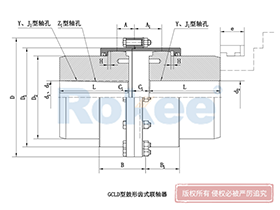
GCLD Drum Gear Coupling
Motor Shaft Extension
GCLD Drum Gear Coupling is generally used for direct connection with the motor, so it generally has a higher speed and compact structure.View More![NGCL Drum Gear Coupling,Gear Tooth Couplings]()
NGCL Drum Gear Coupling
With Brake Wheel
NGCL Drum Gear Coupling is designed with a brake wheel, suitable for situations where braking is required.View More![NGCLZ Drum Gear Coupling,Gear Tooth Couplings]()
NGCLZ Drum Gear Coupling
With Brake Wheel
NGCLZ Drum Gear Coupling is designed with a brake wheel, suitable for situations where braking is required. Half of its structure adopts a semi-coupling sleeve design, with smaller angular displacement compensation but more stable braking.View More![WG Drum Gear Coupling,Gear Tooth Couplings]()
WG Drum Gear Coupling
Basic
The overall characteristics of WG Drum Gear Coupling are similar to those of other drum gear couplings, but with a larger modulus design, which can generally transmit greater torque.View More![WGZ Drum Gear Coupling,Gear Tooth Couplings]()
WGZ Drum Gear Coupling
With Brake Wheel
WGZ Drum Gear Coupling is designed with a brake wheel, suitable for shoe type braking.View More![WGP Drum Gear Coupling,Gear Tooth Couplings]()
WGP Drum Gear Coupling
With Brake Discs
WGP Drum Gear Coupling is designed with a brake disc, suitable for disc type braking.View More![WGT Drum Gear Coupling,Gear Tooth Couplings]()
WGT Drum Gear Coupling
Intermediate Connecting Pipe
WGT Drum Gear Coupling is designed with indirect tube, suitable for long distance torque transfer.View More![WGC Drum Gear Coupling,Gear Tooth Couplings]()
WGC Drum Gear Coupling
Vertical Installation
WGC Drum Gear Coupling is specially designed for situations where vertical transmission is required, suitable for some vertical transmission systems.View More![WGJ Drum Gear Coupling,Gear Tooth Couplings]()
WGJ Drum Gear Coupling
Connected to Intermediate Shaft
WGJ Drum Gear Coupling is designed with intermediate shaft, suitable for long distance torque transmission, and some are equipped with axial buffers.View More
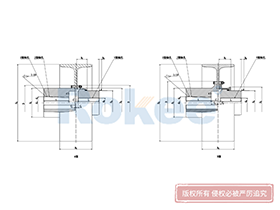
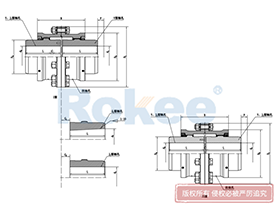
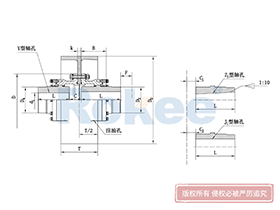
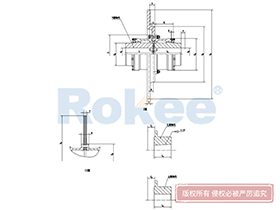
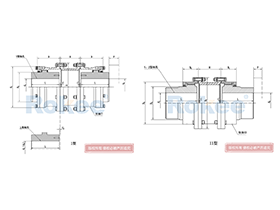
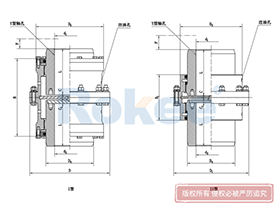
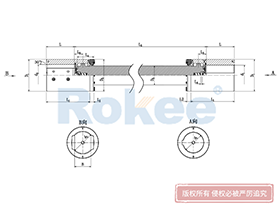
In the complex landscape of industrial power transmission systems, couplings serve as the critical link between rotating shafts, enabling the seamless transfer of torque while accommodating inevitable misalignments. Among the diverse range of coupling technologies available, gear tooth couplings stand out for their exceptional torque-carrying capacity, robust performance in harsh operating conditions, and versatility across various industrial sectors. Unlike flexible couplings that rely on elastomeric elements or disc packs, gear tooth couplings leverage the precision engagement of gear teeth to transmit power, making them indispensable for heavy-duty, high-torque applications where reliability and durability are paramount.
1. Fundamental Concepts and Working Principles of Gear Tooth Couplings
A gear tooth coupling is a type of rigid-flexible coupling designed to connect two rotating shafts, transmit torque efficiently, and compensate for three primary types of shaft misalignment: axial (linear displacement along the shaft axis), radial (offset between shaft centers), and angular (tilt between shaft axes). The core operating principle of a gear tooth coupling revolves around the meshing of external gear teeth on two shaft-mounted hubs with internal gear teeth on a surrounding sleeve or flange. This meshing interface distributes the transmitted torque across multiple tooth contacts, minimizing stress concentration and enhancing load-bearing capacity compared to single-point contact couplings.
When the driving shaft rotates, torque is transferred through the external teeth of the driving hub to the internal teeth of the sleeve, and subsequently to the external teeth of the driven hub, ultimately driving the driven shaft. During operation, slight relative movements between the shafts (due to misalignment, thermal expansion, or vibration) are accommodated by the sliding of gear teeth against each other within the meshing interface. This sliding action, while necessary for misalignment compensation, creates frictional forces that can lead to wear if not properly lubricated. Thus, the design of gear tooth couplings inherently incorporates lubrication and sealing systems to reduce friction, prevent corrosion, and extend service life.
A key characteristic of gear tooth couplings is their positive torque transmission—unlike some flexible couplings that rely on friction or elastomeric deformation, the gear meshing ensures a direct, non-slip transfer of power. This positive engagement makes them particularly suitable for applications requiring precise torque control and high power density, such as heavy machinery and industrial drives.
2. Structural Design and Components of Gear Tooth Couplings
The basic structure of a gear tooth coupling consists of four primary components: external gear hubs, internal gear sleeve/flange, sealing devices, and connecting fasteners. Each component is engineered to work in tandem to ensure reliable torque transmission and misalignment compensation.
2.1 External Gear Hubs
The external gear hubs are cylindrical components mounted directly on the ends of the driving and driven shafts, typically secured via keyways, interference fits, or shrink fitting. Each hub features a set of external gear teeth machined to precise dimensions. The tooth profile is most commonly an involute curve, chosen for its smooth meshing characteristics, uniform load distribution, and ability to accommodate slight misalignments without excessive wear. The number of teeth on the hubs varies depending on the application requirements, ranging from 20 to 50 teeth, with module sizes (a measure of tooth size) between 2 and 10 mm. The external gear teeth may be straight or crowned (drum-shaped), a design variation that significantly impacts the coupling’s misalignment compensation capabilities.
2.2 Internal Gear Sleeve/Flange
The internal gear sleeve (or flange) is an annular component with internal gear teeth that mesh with the external teeth of the hubs. The internal gear profile is complementary to the external gear profile, ensuring precise engagement. For straight-tooth designs, the internal gear teeth are parallel to the sleeve axis, while for crowned-tooth designs, the internal teeth are machined to match the spherical curvature of the external crowned teeth. In some configurations, the sleeve is split into two halves (flanged sleeves) to facilitate installation and removal without disassembling the entire shaft system—a feature particularly useful for large, heavy-duty applications where shaft disassembly is impractical.
2.3 Sealing Systems
Sealing devices are critical for maintaining the integrity of the lubrication system in gear tooth couplings. Common sealing configurations include end caps, O-rings, lip seals, or labyrinth seals, which form a closed cavity around the gear meshing interface. These seals prevent lubricant leakage and block the ingress of external contaminants such as dust, dirt, water, and corrosive substances—all of which can accelerate tooth wear and reduce coupling lifespan. In harsh environments (e.g., chemical plants, coastal areas), specialized seals with enhanced corrosion resistance may be used to ensure long-term performance.
2.4 Connecting Fasteners
Connecting fasteners, such as high-strength bolts or reamer bolts, are used to secure the split sleeve halves (if applicable) and ensure the coupling remains rigidly connected during operation. The fasteners must be torqued to precise specifications to prevent loosening under vibration, which can lead to misalignment, increased wear, and potential coupling failure. In some designs, lock washers or thread-locking compounds are additional used to enhance fastener stability.
3. Types of Gear Tooth Couplings: Straight-Tooth vs. Crowned-Tooth
Gear tooth couplings are primarily categorized into two types based on the geometry of their external gear teeth: straight-tooth (spur-tooth) and crowned-tooth (drum-tooth) couplings. Each type offers distinct advantages and is suited to specific application requirements.
3.1 Straight-Tooth Gear Couplings
Straight-tooth gear couplings feature external teeth that are parallel to the shaft axis. This design is relatively simple to manufacture, making it cost-effective for applications with moderate requirements. Straight-tooth couplings can transmit high torque and accommodate limited axial and radial misalignments. However, their ability to compensate for angular misalignment is constrained—when angular misalignment occurs, the tooth contact is concentrated at the tooth ends, leading to increased stress, accelerated wear, and potential tooth damage over time. As a result, straight-tooth gear couplings are best suited for applications where shaft alignment can be maintained with high precision, such as some medium-torque industrial pumps and fans.
3.2 Crowned-Tooth Gear Couplings
Crowned-tooth gear couplings represent an advanced design where the external gear teeth are machined into a spherical (drum-shaped) profile, with the center of the sphere aligned with the shaft axis. This innovative geometry fundamentally improves the coupling’s misalignment compensation capabilities by ensuring uniform tooth contact even when angular misalignment is present. Unlike straight-tooth couplings, which suffer from edge loading at angles, crowned-tooth couplings distribute the load across the entire tooth surface, reducing stress concentration and wear.
The advantages of crowned-tooth designs are substantial: they can accommodate angular misalignments up to 50% greater than straight-tooth couplings (when radial displacement is zero) and transmit 15–30% more torque for the same radial size. Additionally, the crowned tooth profile reduces noise and vibration during operation, enhancing overall system stability. These benefits make crowned-tooth gear couplings the preferred choice for heavy-duty, high-misalignment applications, such as metallurgical rolling mills, mining crushers, and large-scale conveyors.
Other specialized variations of gear tooth couplings include floating-shaft couplings (used for long-span shaft connections), half-gear couplings (combining a gear hub with a rigid hub for one-sided flexibility), and continuous-sleeve couplings (featuring a single, non-split sleeve for enhanced contamination protection).
4. Material Selection and Manufacturing Processes
The performance and durability of gear tooth couplings are heavily dependent on the selection of high-quality materials and precise manufacturing processes. Given the high loads, frictional forces, and harsh operating conditions they often endure, gear tooth coupling components are typically fabricated from high-strength alloy steels, with specialized heat treatments to enhance hardness, wear resistance, and toughness.
4.1 Material Selection
External gear hubs are commonly made from alloy steels such as 42CrMo, a high-strength quenched and tempered steel known for its excellent toughness and fatigue resistance. This material can withstand the high torque loads and shock impacts typical of heavy-duty applications. Internal gear sleeves may be fabricated from cast steels such as ZG310-570, which offers good castability and sufficient strength for the sleeve’s structural role. For applications requiring enhanced wear resistance (e.g., high-speed or abrasive environments), the gear teeth may be made from carburizing steels such as 20CrMnTi, which can be heat-treated to achieve a hard surface (HRC 58–62) while maintaining a tough core.
In corrosive environments (e.g., chemical processing plants, marine applications), stainless steel alloys (such as 304 or 316L) may be used for coupling components to prevent rust and corrosion. These materials, while more expensive, extend service life in harsh conditions by resisting chemical attack and moisture-induced degradation.
4.2 Heat Treatment Processes
Heat treatment is a critical step in manufacturing gear tooth couplings, as it optimizes the mechanical properties of the materials. Common heat treatment processes include:
- Quenching and Tempering: Applied to 42CrMo hubs to achieve a balanced combination of strength (tensile strength ≥ 900 MPa) and toughness. The process involves heating the steel to a high temperature, rapid cooling (quenching), and then reheating to a lower temperature (tempering) to reduce brittleness.
- Normalizing and Tempering: Used for cast steel sleeves to refine the grain structure, improve machinability, and enhance dimensional stability. This process results in a yield strength of at least 310 MPa for ZG310-570 steel.
- Carburizing and Quenching: Applied to 20CrMnTi gear teeth to create a hard, wear-resistant surface. The component is heated in a carbon-rich atmosphere, allowing carbon to diffuse into the surface layer, followed by quenching to harden the surface. This treatment increases wear resistance by up to 50% compared to untreated steel.
4.3 Manufacturing and Machining
Precision machining is essential to ensure the proper meshing of gear teeth and the overall performance of the coupling. Key manufacturing processes include:
- Hobbing: A common process for machining gear teeth, involving the use of a rotating hob (a cutting tool with a helical profile) to generate the involute tooth shape on the hub or sleeve. Hobbing is efficient and versatile, suitable for mass production of both straight and crowned teeth.
- Grinding: Used to achieve high precision and surface finish on gear teeth. Precision grinding ensures that the tooth profile, pitch, and lead are within tight tolerances, reducing friction and wear during operation.
- Balancing: For high-speed applications (up to 8000 rpm), gear tooth couplings undergo dynamic balancing to minimize vibration. Balancing to G2.5 class (a common standard for industrial couplings) ensures smooth operation at high speeds, reducing stress on the shaft and bearings.
5. Performance Characteristics and Advantages
Gear tooth couplings offer a unique set of performance characteristics that make them indispensable in many industrial applications. Their key advantages include:
5.1 High Torque Capacity
The multiple-tooth meshing design of gear tooth couplings allows them to transmit significantly higher torque than many other coupling types of the same size. Crowned-tooth designs, in particular, offer a 15–30% higher torque capacity than straight-tooth couplings, making them ideal for heavy-duty applications such as rolling mills, crushers, and large conveyors. This high torque density means that gear tooth couplings can provide powerful torque transmission in a compact radial footprint, saving space in equipment designs.
5.2 Excellent Misalignment Compensation
As discussed earlier, crowned-tooth gear couplings excel at compensating for axial, radial, and angular misalignments. This capability is critical in industrial settings where perfect shaft alignment is difficult to achieve or maintain due to thermal expansion, structural deflection, or vibration. By accommodating these misalignments, gear tooth couplings reduce stress on shafts, bearings, and other components, extending the overall lifespan of the transmission system.
5.3 High Durability and Long Service Life
Constructed from high-strength alloy steels and subjected to rigorous heat treatments, gear tooth couplings are highly durable and can withstand harsh operating conditions, including high temperatures, shock loads, and heavy vibrations. When properly lubricated and maintained, their service life can exceed 100,000 operating hours—a significant advantage in applications where downtime for maintenance or replacement is costly.
5.4 Wide Speed Range
Gear tooth couplings operate effectively across a broad speed range, from low speeds (below 100 rpm) in heavy-duty crushers to high speeds (up to 8000 rpm) in gas turbine applications. This versatility is attributed to their robust design, precision machining, and effective lubrication systems, which minimize friction and vibration at high speeds.
5.5 Compact and Lightweight Design
Despite their high torque capacity, gear tooth couplings are relatively compact and lightweight compared to other heavy-duty coupling types. For example, forged steel hubs are 15% lighter than cast steel alternatives, reducing the overall weight of the transmission system and minimizing inertial forces at high speeds. This compact design is particularly beneficial in applications with limited installation space.
6. Applications Across Industrial Sectors
The unique combination of high torque capacity, misalignment compensation, and durability makes gear tooth couplings suitable for a wide range of industrial applications. Below are some of the key sectors where they are commonly used:
6.1 Metallurgy and Steel Industry
In the metallurgy industry, gear tooth couplings are critical components in rolling mills (hot and cold rolling), continuous casters, and steel processing machinery. These applications require the transmission of extremely high torques (often in excess of 10,000 N·m) and must accommodate misalignments caused by thermal expansion of the rolls and structural deflection. Crowned-tooth couplings are the preferred choice here, as their ability to handle high misalignments and torque ensures reliable operation of the rolling process.
6.2 Mining and Quarrying
Mining equipment such as crushers, conveyors, and excavators operate in harsh, dusty environments with high shock loads and significant misalignments. Gear tooth couplings are used to connect the prime mover (electric motor or diesel engine) to the equipment’s working components, transmitting high torque while withstanding the abrasive and vibratory conditions. Their robust construction and sealed design protect against dust and debris, ensuring long service life in these demanding applications.
6.3 Cement and Construction Materials
Cement plants rely on gear tooth couplings in rotary kilns, cement mills, and conveyors. Rotary kilns, which operate at low speeds (1–5 rpm) and high torques, require couplings that can accommodate the slight misalignments caused by the kiln’s thermal expansion and structural flexing. Gear tooth couplings provide the necessary torque transmission and misalignment compensation, ensuring continuous operation of the cement production process.
6.4 Energy and Power Generation
In power generation, gear tooth couplings are used in gas turbines, steam turbines, and wind turbine gearboxes. High-speed gas turbines (up to 8000 rpm) require precision-balanced couplings to minimize vibration, while wind turbines need couplings that can handle variable torques and misalignments caused by wind loads. Gear tooth couplings’ high torque capacity and speed versatility make them suitable for these applications.
6.5 General Machinery and Manufacturing
Gear tooth couplings are also used in a range of general machinery, including large pumps, fans, compressors, and material handling equipment. In these applications, they provide reliable torque transmission and misalignment compensation, reducing maintenance costs and improving operational efficiency.
7. Maintenance Practices for Optimal Performance
While gear tooth couplings are highly durable, proper maintenance is essential to ensure their long-term performance and prevent premature failure. The most critical maintenance tasks revolve around lubrication, alignment, and regular inspection.
7.1 Lubrication
Adequate lubrication is the single most important factor in extending the life of a gear tooth coupling. The lubricant serves three key purposes: reducing friction between meshing teeth, protecting against corrosion, and dissipating heat generated by sliding contact. The choice of lubricant depends on the operating conditions (speed, temperature, load) and the environment.
Common lubricants for gear tooth couplings include lithium-based greases (NLGI 2 grade), which offer good thermal stability and load-carrying capacity for most industrial applications. For high-temperature applications (above 120°C), synthetic greases or oils may be required. It is essential to ensure that the lubricant fills the entire gear meshing cavity and that the seals are intact to prevent leakage. Lubrication intervals vary depending on the application but typically range from 6 months to 2 years for normal operating conditions. In harsh environments (dusty, wet, or high-temperature), lubrication intervals should be shortened.
7.2 Alignment
Proper shaft alignment is critical to prevent premature wear and failure of gear tooth couplings. Even with the misalignment compensation capabilities of crowned-tooth designs, excessive misalignment (beyond the coupling’s rated capacity) will lead to edge loading, increased friction, and accelerated tooth wear. Laser alignment tools are recommended for precise alignment, as they can detect misalignments down to micrometers, ensuring that the shafts are aligned within the coupling’s specified limits.
Alignment should be checked during installation and periodically thereafter, particularly after equipment maintenance, component replacement, or any event that could disrupt alignment (e.g., foundation settlement, vibration). Regular alignment checks help to identify and correct issues before they cause significant damage.
7.3 Inspection and Monitoring
Regular visual and functional inspections are essential to detect early signs of wear or damage. Key inspection points include:
- Gear Teeth: Check for signs of wear, pitting, cracking, or tooth loss. Wear can be measured using calipers or specialized gear inspection tools. Pitting (small craters on the tooth surface) is often a sign of inadequate lubrication or excessive load.
- Seals: Inspect seals for leakage or damage. Leaking lubricant indicates a seal failure, which can lead to contamination and dry running of the gear teeth.
- Fasteners: Check that bolts and other fasteners are tight and secure. Loose fasteners can cause misalignment and vibration, leading to increased wear.
- Vibration and Noise: Unusual vibration or noise during operation can indicate misalignment, worn teeth, or inadequate lubrication. Vibration monitoring systems can be used to detect changes in operating conditions and trigger maintenance alerts.
If any signs of damage or excessive wear are detected, the coupling should be repaired or replaced promptly to prevent catastrophic failure of the transmission system.
8. Common Failure Modes and Troubleshooting
Despite proper maintenance, gear tooth couplings may occasionally fail due to various factors. Understanding common failure modes and their root causes is essential for effective troubleshooting and prevention.
8.1 Lubrication-Related Failures
Inadequate lubrication is the most common cause of gear tooth coupling failure. Dry running (lack of lubricant) or using the wrong type of lubricant leads to excessive friction, overheating, and rapid wear. Symptoms include worn or glazed tooth surfaces, increased noise, and elevated temperatures. The solution is to replace the lubricant with the correct type and ensure that the seals are intact to prevent future leakage.
8.2 Misalignment-Related Failures
Excessive misalignment causes edge loading, where the load is concentrated at the ends of the gear teeth. This leads to uneven wear, tooth cracking, and eventually tooth breakage. Symptoms include uneven tooth wear, vibration, and noise. The solution is to realign the shafts using precision tools and ensure that the misalignment is within the coupling’s rated capacity.
8.3 Overload or Shock Load Failures
Operating the coupling beyond its torque capacity or subjecting it to sudden shock loads (e.g., startup surges, equipment jams) can cause tooth bending, cracking, or breakage. Symptoms include broken teeth, distorted hubs, or sudden loss of torque transmission. The solution is to select a coupling with a torque capacity that exceeds the application’s maximum load and to use soft-start devices to minimize startup surges.
8.4 Material or Manufacturing Defects
Defects in materials or manufacturing (e.g., impure steel, improper heat treatment, poor machining) can lead to premature failure. Symptoms include unexpected cracking, pitting, or wear. The solution is to source couplings from reputable manufacturers and ensure that materials and manufacturing processes meet industry standards.
9. Future Trends and Innovations
The field of gear tooth couplings is continuously evolving, driven by the need for higher performance, greater efficiency, and reduced maintenance. Key emerging trends and innovations include:
9.1 Advanced Material Development
Research into new materials, such as composite alloys and surface coatings, is focused on improving wear resistance and reducing weight. For example, diamond-like carbon (DLC) coatings on gear teeth can further enhance wear resistance, extending service life in high-wear applications. Lightweight, high-strength alloys are also being developed to reduce the inertial forces of high-speed couplings, improving energy efficiency.
9.2 Smart Monitoring Systems
The integration of sensors and IoT (Internet of Things) technology into gear tooth couplings is enabling real-time monitoring of operating conditions. Sensors can measure temperature, vibration, lubricant quality, and tooth wear, transmitting data to a central system for analysis. This predictive maintenance approach allows for early detection of potential issues, reducing downtime and maintenance costs.
9.3 Improved Lubrication Systems
Self-lubricating or permanent lubrication systems are being developed to reduce the need for manual lubrication. These systems use advanced lubricants and sealed designs to maintain lubrication integrity for the entire service life of the coupling, eliminating the risk of lubrication-related failures and reducing maintenance requirements.
9.4 Optimization Through Simulation
Advanced finite element analysis (FEA) and computational fluid dynamics (CFD) simulations are being used to optimize the design of gear tooth couplings. These tools allow engineers to analyze stress distribution, tooth contact, and lubricant flow, leading to more efficient designs with higher torque capacity, better misalignment compensation, and reduced wear.
10. Conclusion
Gear tooth couplings are essential components in industrial power transmission systems, offering exceptional torque-carrying capacity, robust misalignment compensation, and durability in harsh operating conditions. Their design, which leverages the precision meshing of gear teeth, makes them ideal for heavy-duty applications across metallurgy, mining, cement, energy, and general manufacturing sectors. The choice between straight-tooth and crowned-tooth designs depends on the application’s misalignment requirements, with crowned-tooth couplings offering superior performance in high-misalignment scenarios.
Proper material selection, precision manufacturing, and rigorous maintenance—particularly lubrication and alignment—are critical to ensuring the long-term performance of gear tooth couplings. By understanding common failure modes and implementing proactive maintenance practices, operators can minimize downtime and extend the service life of these critical components.
Looking to the future, advancements in materials, smart monitoring, and design optimization are poised to further enhance the performance and efficiency of gear tooth couplings, ensuring they remain a vital part of industrial power transmission systems for years to come. As industries continue to demand higher power density, greater reliability, and reduced maintenance, gear tooth couplings will continue to evolve to meet these challenges.
« Gear Tooth Couplings » Post Date: 2023/12/26
URL: //5008517517.com/en/tags/gear-tooth-couplings.html