Crown Pin Couplings
Rokee is Crown Pin Couplings Manufacturer, Customizable according to the crown pin couplings drawings provided by the customer, Support Export.
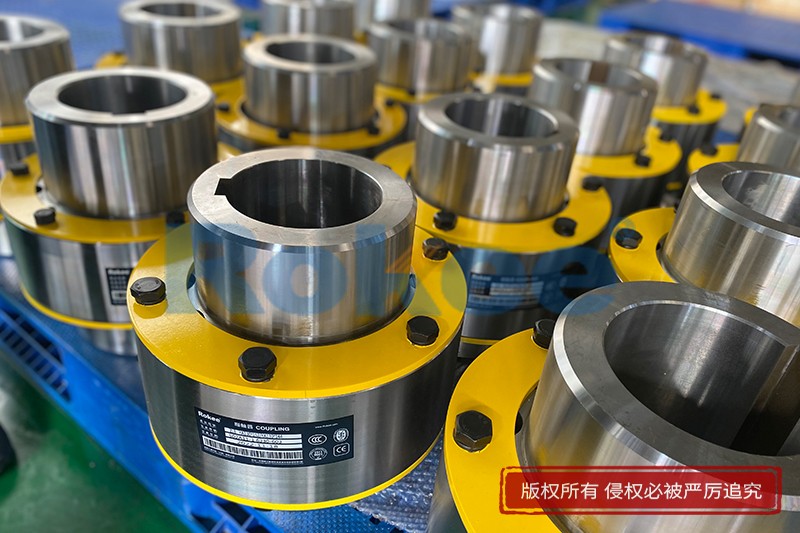
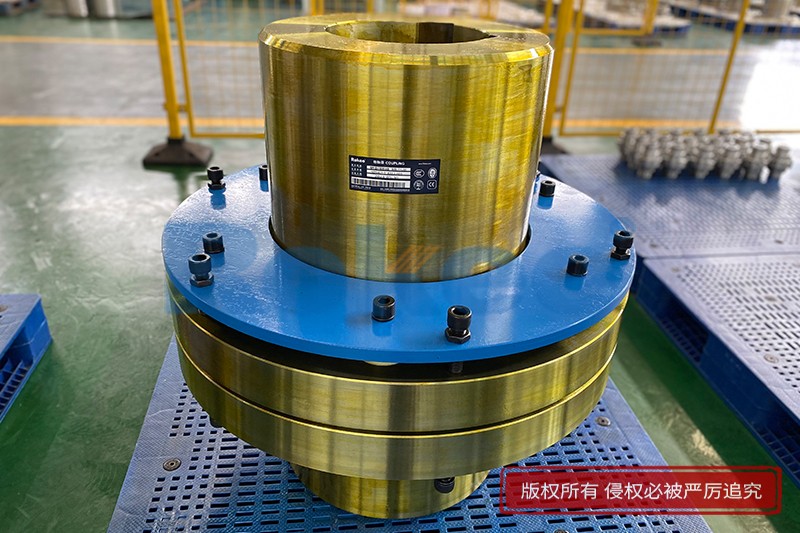
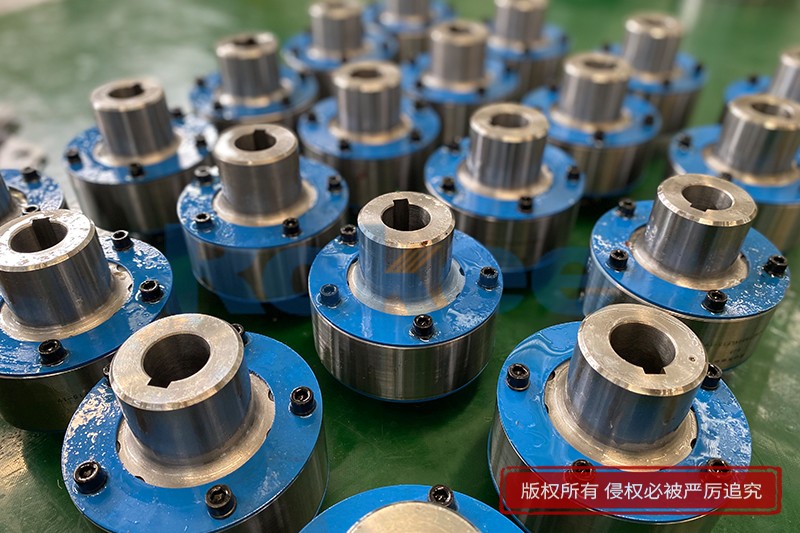
The Crown Pin Coupling is designed with non-metallic flexible pin, two toothed semi-couplings and a toothed sleeve ring with an outer ring. Crown Pin Coupling uses non-metallic flexible deformation to transfer torque and cushion shock and compensate angular displacement.
![LZ/ZL Pin Gear Coupling,Crown Pin Couplings]()
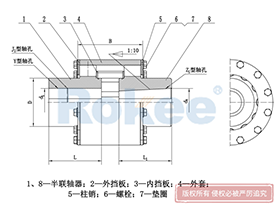
LZ/ZL Pin Gear Coupling
Basic Type
LZ Pin Gear Coupling is the basic form of this series of couplings.View More![LZD/ZLD Pin Gear Coupling,Crown Pin Couplings]()
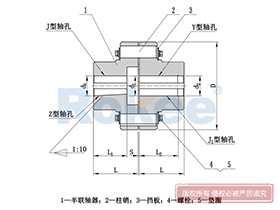
LZD/ZLD Pin Gear Coupling
Conical Shaft Hole
One end of the LZD Pin Gear Coupling is designed with a conical shaft hole, and the clearance between the semi-couplings is increased to facilitate the fixing space at the shaft end.View More![LZZ/ZLL Pin Gear Coupling,Crown Pin Couplings]()
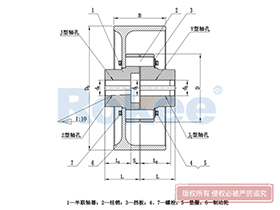
LZZ/ZLL Pin Gear Coupling
With Brake Wheel
LZZ Pin Gear Coupling is designed with a brake wheel, suitable for situations where braking is required.View More![LX/HL Flexible Pin Coupling,Crown Pin Couplings]()
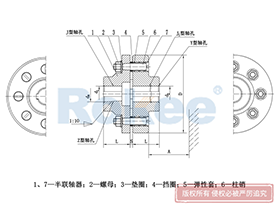
LX/HL Flexible Pin Coupling
Basic Type
LX(HL) Flexible Pin Coupling is the basic form of this series of couplings.View More![LXZ/HLL Flexible Pin Coupling,Crown Pin Couplings]()
LXZ/HLL Flexible Pin Coupling
With Brake Wheel
LXZ(HLL) Flexible Pin Coupling is designed with a brake wheel, suitable for situations where braking is required.View More![LT/TL Elastic Sleeve Pin Coupling,Crown Pin Couplings]()
LT/TL Elastic Sleeve Pin Coupling
Basic Type
LT Elastic Sleeve Pin Coupling is the basic form of this series of couplings.View More![LTZ/TLL Elastic Sleeve Pin Coupling,Crown Pin Couplings]()
LTZ/TLL Elastic Sleeve Pin Coupling
With Brake Wheel
LTZ Elastic Sleeve Pin Coupling is designed with a brake wheel, suitable for situations where braking is required.View More
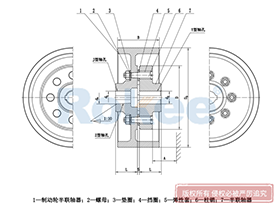
In the realm of industrial power transmission, couplings serve as the critical link between rotating shafts, ensuring the seamless transfer of torque while accommodating inevitable misalignments and mitigating operational shocks. Among the diverse range of coupling technologies available, the crown pin coupling stands out as a robust, cost-effective solution tailored to meet the demands of numerous industrial environments. Characterized by its simple structural design, maintenance-free operation, and exceptional adaptability to harsh working conditions, this type of coupling has secured a prominent position in applications ranging from material handling systems to heavy-duty industrial machinery.
1. Structural Composition of Crown Pin Coupling
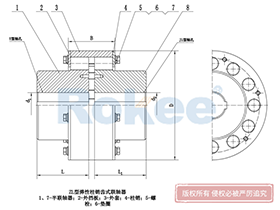
The crown pin coupling is a type of pin-and-buffer coupling that features a straightforward yet ingenious design, consisting of three core components: two semi-couplings, crown pins (equipped with non-metallic flexible elements), and a retaining structure. Each component is meticulously engineered to work in synergy, ensuring reliable torque transmission and structural integrity under varying operational loads.
The two semi-couplings form the primary connection points to the driving and driven shafts. Typically fabricated from high-strength materials such as cast iron or steel, these semi-couplings are designed with flange-like structures that contain evenly distributed holes to accommodate the crown pins. The choice of material for the semi-couplings is determined by the application's torque requirements and environmental conditions; steel is preferred for heavy-duty applications due to its superior tensile strength and resistance to wear, while cast iron offers a cost-effective alternative for medium-duty scenarios. The inner bore of each semi-coupling is precision-machined to ensure a tight fit with the shafts, minimizing slippage during operation. In some configurations, taper bush bores are incorporated to facilitate easier installation and disassembly, a feature particularly valuable in maintenance-intensive environments.
The crown pins, which are the defining element of this coupling type, are equipped with non-metallic flexible buffers. These buffers are commonly made from materials such as neoprene, urethane, or Hytrel, each offering distinct advantages in terms of flexibility, temperature resistance, and durability. Neoprene buffers, for instance, provide excellent resistance to oil and chemical exposure, making them suitable for harsh industrial settings, while urethane buffers offer enhanced abrasion resistance and a longer service life. The crown-shaped design of the pins, combined with the flexibility of the non-metallic elements, enables the coupling to accommodate various types of misalignments, including axial, angular, and radial offsets. This flexibility is crucial in compensating for the inevitable misalignments that occur due to manufacturing tolerances, installation errors, shaft deflection under load, and thermal expansion.
The retaining structure, which may include nuts, washers, or snap rings, secures the crown pins in place within the semi-coupling flanges. This structure ensures that the pins remain properly positioned during operation, preventing disengagement and maintaining the integrity of the torque transmission path. The simplicity of this retaining mechanism contributes to the coupling's ease of assembly and disassembly, reducing maintenance time and costs.
2. Working Principle of Crown Pin Coupling
The fundamental operating principle of the crown pin coupling revolves around the transfer of torque from the driving shaft to the driven shaft through the crown pins, while leveraging the flexibility of the non-metallic buffers to absorb shocks and compensate for misalignments. The process can be broken down into three key stages: torque transmission, misalignment compensation, and shock absorption.
In terms of torque transmission, when the driving shaft rotates, it imparts rotational force to the connected semi-coupling. This rotational force is then transferred to the crown pins, which are inserted through the holes in the semi-coupling flange. The crown pins, in turn, transmit the torque to the second semi-coupling, which is connected to the driven shaft. The contact between the crown pins and the semi-coupling flanges is designed to ensure a uniform distribution of torque, minimizing stress concentrations and preventing premature wear. The non-metallic buffers, while primarily responsible for flexibility, also play a role in torque transmission by maintaining a tight fit between the pins and the semi-coupling holes.
Misalignment compensation is one of the most critical functions of the crown pin coupling. As mentioned earlier, industrial shafts are prone to various types of misalignments, which can lead to increased friction, vibration, and premature failure of the coupling and other machinery components. The crown-shaped design of the pins, combined with the elasticity of the non-metallic buffers, allows the coupling to accommodate these misalignments without compromising torque transmission. For angular misalignment (where the shafts are not collinear but intersect at a point), the flexible buffers bend slightly, allowing the crown pins to pivot within the semi-coupling holes. For radial misalignment (where the shafts are parallel but offset), the buffers compress and expand asymmetrically, bridging the gap between the semi-couplings. For axial misalignment (where the shafts are collinear but displaced along their axis), the buffers absorb the axial movement through compression or extension. This ability to compensate for multiple types of misalignments makes the crown pin coupling a versatile solution for a wide range of industrial applications.
Shock absorption is another key aspect of the crown pin coupling's working principle. In many industrial operations, such as those involving crushers, conveyors, or pumps, sudden load fluctuations and shock loads are common. These shocks can cause significant stress on the machinery, leading to premature failure of components such as bearings, gears, and shafts. The non-metallic buffers in the crown pin coupling act as shock absorbers, absorbing the kinetic energy generated by these sudden loads. When a shock load is applied, the buffers deform elastically, dissipating the energy and reducing the impact on the shafts and other machinery components. This shock absorption capability not only extends the service life of the coupling but also enhances the overall reliability and longevity of the entire power transmission system.
3. Key Performance Characteristics
The crown pin coupling possesses a set of performance characteristics that make it particularly well-suited for industrial applications. These characteristics include high torque capacity, torsional flexibility, maintenance-free operation, cost-effectiveness, and wide temperature adaptability.
One of the most notable characteristics of the crown pin coupling is its high torque capacity. Depending on the size and design, crown pin couplings can handle torque values ranging from a few hundred Newton-meters to as high as 249,400 Newton-meters, making them suitable for both medium-duty and heavy-duty applications. At low speeds (e.g., 100 revolutions per minute), some large-scale crown pin couplings can transmit power up to 2,611 kilowatts, making them ideal for use in heavy machinery such as cranes, mine drives, and steel rolling mills. This high torque capacity is attributed to the robust design of the semi-couplings and the efficient torque transmission path provided by the crown pins.
Torsional flexibility is another key performance characteristic of the crown pin coupling. This flexibility refers to the coupling's ability to twist slightly under torque, which helps to absorb vibrations and shocks. The non-metallic buffers play a crucial role in providing this torsional flexibility, as they are designed to deform elastically under load. This flexibility not only reduces vibration levels but also helps to extend the service life of the coupling and other machinery components by minimizing the stress caused by torsional oscillations. In addition, the torsional flexibility of the crown pin coupling helps to smooth out torque fluctuations, ensuring a more stable operation of the driven machinery.
Maintenance-free operation is a significant advantage of the crown pin coupling, especially in industrial environments where maintenance time and costs are major concerns. Unlike some other types of couplings (such as gear couplings) that require regular lubrication to prevent wear, the crown pin coupling does not require lubrication. This is because the non-metallic buffers act as self-lubricating elements, reducing friction between the crown pins and the semi-coupling holes. Additionally, the coupling has a minimal number of wearing parts, which further reduces the need for maintenance. Regular inspection of the non-metallic buffers for signs of wear or damage is typically the only maintenance requirement, and replacement of the buffers (when necessary) is a simple and cost-effective process.
Cost-effectiveness is another important characteristic of the crown pin coupling. The simple structural design of the coupling results in lower manufacturing costs compared to more complex coupling types. Additionally, the ease of installation and maintenance, combined with the long service life of the components, reduces the total cost of ownership over the coupling's lifespan. This cost-effectiveness makes the crown pin coupling an attractive option for small and medium-sized enterprises, as well as for large industrial facilities looking to optimize their operational costs.
The crown pin coupling also offers wide temperature adaptability, thanks to the use of advanced non-metallic buffer materials. Depending on the material used for the buffers, the coupling can operate effectively in temperatures ranging from -40°C to 120°C. This makes it suitable for use in a wide range of environmental conditions, from cold storage facilities to high-temperature industrial processes such as steel production. The temperature resistance of the buffers also ensures that the coupling maintains its flexibility and performance even under extreme temperature conditions, preventing premature failure.
4. Industrial Applications of Crown Pin Coupling
Due to its robust design, high torque capacity, flexibility, and cost-effectiveness, the crown pin coupling finds applications in a wide range of industrial sectors. These applications span from light-duty material handling systems to heavy-duty industrial machinery, where reliable torque transmission and misalignment compensation are critical.
One of the most common applications of the crown pin coupling is in material handling systems, such as conveyors and cranes. Conveyors are used extensively in industries such as mining, agriculture, and manufacturing to transport materials over long distances. The crown pin coupling is ideal for conveyor systems because it can accommodate the misalignments that occur due to the long length of the conveyor shafts and the deflection under load. Additionally, the shock absorption capability of the coupling helps to handle the sudden load fluctuations that occur when the conveyor is loaded or unloaded. Cranes, which are used for lifting and moving heavy loads, also benefit from the high torque capacity and shock absorption of the crown pin coupling. The coupling ensures that the torque from the crane's motor is transmitted smoothly to the hoisting mechanism, while absorbing the shocks that occur during lifting and lowering operations.
The crown pin coupling is also widely used in pump and fan systems. Pumps are essential in industries such as water treatment, oil and gas, and chemical processing, where they are used to transfer fluids. The coupling's ability to compensate for misalignments is crucial in pump systems, as misalignments between the pump and motor shafts can lead to increased wear on the pump's bearings and seals. The maintenance-free operation of the crown pin coupling is also a significant advantage in pump applications, as it reduces the need for frequent maintenance in hard-to-reach areas. Fans, which are used for ventilation and cooling in industrial facilities, also benefit from the coupling's flexibility and shock absorption, which help to reduce vibration and noise levels.
Another important application area for the crown pin coupling is in heavy-duty industrial machinery, such as mixers, crushers, and steel rolling mills. Mixers, which are used in the food processing, pharmaceutical, and chemical industries, require reliable torque transmission to ensure uniform mixing of materials. The crown pin coupling's high torque capacity and flexibility make it suitable for these applications, as it can handle the high loads and misalignments that occur during mixing operations. Crushers, which are used in the mining and construction industries to break down large rocks and minerals, are subject to severe shock loads. The shock absorption capability of the crown pin coupling helps to protect the crusher's shafts and bearings from these shocks, extending the machinery's service life. Steel rolling mills, which operate under high torque and high temperature conditions, also use crown pin couplings to transmit torque between the motors and the rolling stands. The coupling's high torque capacity and temperature adaptability make it ideal for these demanding applications.
In addition to these industrial applications, the crown pin coupling is also used in commercial and public facilities, such as escalators and lifts. Escalators and lifts require reliable and smooth torque transmission to ensure passenger safety and comfort. The crown pin coupling's ability to compensate for misalignments and absorb shocks helps to ensure smooth operation of these systems, reducing the risk of breakdowns and ensuring passenger safety.
5. Installation and Maintenance Guidelines
The proper installation and maintenance of the crown pin coupling are essential to ensure its optimal performance and long service life. While the coupling is designed for ease of installation and maintenance, following the correct guidelines is crucial to avoid premature failure and ensure the safety of the machinery and operators.
5.1 Installation Guidelines
The installation process of the crown pin coupling can be divided into four key steps: preparation, alignment, assembly, and verification.
Preparation involves cleaning the shafts and semi-coupling bores to remove any dirt, debris, or rust. This ensures a tight fit between the semi-couplings and the shafts, preventing slippage during operation. It is also important to inspect the coupling components (semi-couplings, crown pins, and buffers) for any signs of damage or defects before installation. Any damaged components should be replaced to avoid compromising the coupling's performance.
Alignment is one of the most critical steps in the installation process. While the crown pin coupling can compensate for some misalignments, excessive misalignment can lead to increased wear on the buffers and semi-couplings, reducing the coupling's service life. The shafts should be aligned to within the manufacturer's recommended tolerances for angular, radial, and axial misalignment. Various tools can be used for alignment, including dial indicators, laser alignment tools, and straightedges. Laser alignment tools are preferred for precision alignment, as they provide more accurate measurements than traditional tools.
Assembly involves mounting the semi-couplings onto the driving and driven shafts. If the semi-couplings have taper bush bores, the taper bushes should be installed first, followed by the semi-couplings. The semi-couplings should be secured to the shafts using set screws or keys, ensuring a tight and secure fit. Once the semi-couplings are in place, the crown pins (equipped with buffers) are inserted through the holes in the semi-coupling flanges. The retaining structure (nuts, washers, or snap rings) is then installed to secure the pins in place. It is important to ensure that the pins are evenly spaced and that the retaining structure is tightened to the manufacturer's recommended torque specifications.
Verification involves checking the alignment again after assembly to ensure that no misalignment was introduced during the assembly process. It also involves rotating the shafts manually to ensure that the coupling operates smoothly without any binding or excessive resistance. If any binding or resistance is detected, the cause should be identified and corrected before the machinery is put into operation.
5.2 Maintenance Guidelines
As mentioned earlier, the crown pin coupling is designed for maintenance-free operation, but regular inspection is still necessary to ensure its optimal performance. The maintenance guidelines for the coupling can be summarized as follows:
Regular inspection: The coupling should be inspected regularly (e.g., monthly or quarterly, depending on the application) for signs of wear, damage, or loosening. The inspection should focus on the non-metallic buffers, crown pins, semi-couplings, and retaining structure. The buffers should be checked for cracks, tears, or excessive compression, which indicate that they need to be replaced. The crown pins should be inspected for wear or bending, and the semi-couplings should be checked for cracks or deformation. The retaining structure should be inspected to ensure that it is tight and secure.
Replacement of worn components: When worn or damaged components are detected during inspection, they should be replaced immediately. The replacement of the non-metallic buffers is a simple process that involves removing the retaining structure, extracting the old pins and buffers, and installing new ones. It is important to use replacement components that are compatible with the coupling's design to ensure optimal performance.
Cleaning: The coupling should be kept clean to prevent the accumulation of dirt, debris, or oil, which can accelerate wear. Cleaning can be done using a brush or a cloth to remove any accumulated debris. If the coupling is used in a dirty or dusty environment, a protective cover may be installed to prevent debris from entering the coupling.
Lubrication: Unlike other types of couplings, the crown pin coupling does not require lubrication. In fact, the application of lubricants can damage the non-metallic buffers, reducing their flexibility and service life. Therefore, it is important to avoid applying any lubricants to the coupling components.
6. Selection Criteria for Crown Pin Coupling
The selection of the appropriate crown pin coupling for a specific application is crucial to ensure optimal performance and reliability. The selection process should take into account several key factors, including torque requirements, speed, misalignment, environmental conditions, and shaft size.
Torque requirements are the primary factor to consider when selecting a crown pin coupling. The coupling's rated torque should be greater than or equal to the maximum torque generated by the application. It is important to consider both the nominal torque (the torque under normal operating conditions) and the peak torque (the maximum torque generated during start-up or shock loads). Selecting a coupling with a rated torque that is too low can lead to premature failure, while selecting one with a rated torque that is too high can result in unnecessary costs.
Speed is another important factor. The coupling's maximum allowable speed should be greater than or equal to the maximum operating speed of the shafts. The operating speed affects the centrifugal forces acting on the coupling components, and exceeding the maximum allowable speed can lead to increased wear, vibration, and even structural failure.
Misalignment is also a key consideration. The coupling's misalignment capacity should be sufficient to accommodate the maximum expected misalignment in the application. It is important to consider all types of misalignments (angular, radial, and axial) when selecting the coupling. If the application involves significant misalignments, a coupling with a higher misalignment capacity should be selected.
Environmental conditions, such as temperature, humidity, and exposure to chemicals or oil, should also be taken into account. The non-metallic buffers should be selected based on the environmental conditions to ensure that they maintain their flexibility and service life. For example, neoprene buffers are suitable for applications involving oil or chemical exposure, while Hytrel buffers are preferred for high-temperature applications.
Shaft size is another important factor. The coupling's semi-couplings should be compatible with the diameter of the driving and driven shafts. It is important to ensure that the semi-coupling bores match the shaft diameters, or that taper bushes are used to accommodate different shaft sizes. The length of the semi-couplings should also be sufficient to ensure a secure fit on the shafts.
In addition to these factors, the cost and availability of the coupling should also be considered. While the crown pin coupling is generally cost-effective, the cost can vary depending on the size, material, and design. It is important to select a coupling that offers the best balance between performance and cost. Availability is also a consideration, as the timely delivery of replacement components is crucial to minimize downtime in the event of a failure.
7. Conclusion
The crown pin coupling is a versatile and reliable power transmission component that plays a critical role in numerous industrial applications. Its simple structural design, high torque capacity, torsional flexibility, maintenance-free operation, and cost-effectiveness make it an attractive solution for a wide range of applications, from light-duty material handling systems to heavy-duty industrial machinery. By understanding its structural composition, working principle, key performance characteristics, applications, installation and maintenance guidelines, and selection criteria, engineers and maintenance professionals can make informed decisions when selecting and using crown pin couplings, ensuring optimal performance and reliability of their power transmission systems.
As industrial technology continues to evolve, the crown pin coupling is likely to undergo further improvements in terms of material technology and design, enhancing its performance and expanding its range of applications. The ongoing development of advanced non-metallic materials for the buffers, for example, is expected to improve the coupling's temperature resistance, wear resistance, and service life. Additionally, the integration of smart monitoring technologies, such as sensors to detect wear and misalignment, may further enhance the coupling's reliability and reduce maintenance costs.
In conclusion, the crown pin coupling is a vital component in modern industrial power transmission systems, offering a unique combination of performance, reliability, and cost-effectiveness. Its ability to transmit torque efficiently, compensate for misalignments, and absorb shocks makes it an indispensable solution for a wide range of industrial applications, and its continued development is likely to ensure its relevance in the ever-changing industrial landscape.
« Crown Pin Couplings » Post Date: 2023/12/13
URL: //5008517517.com/en/tags/crown-pin-couplings.html