Curved Tooth Couplings
Rokee is Curved Tooth Couplings Manufacturer, Customizable according to the curved tooth couplings drawings provided by the customer, Support Export.
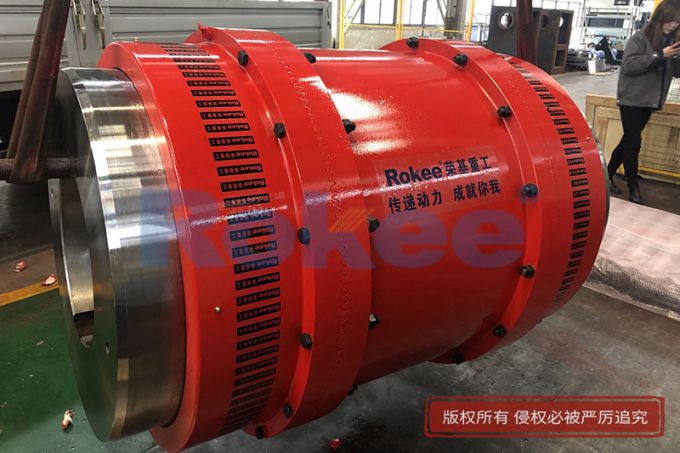
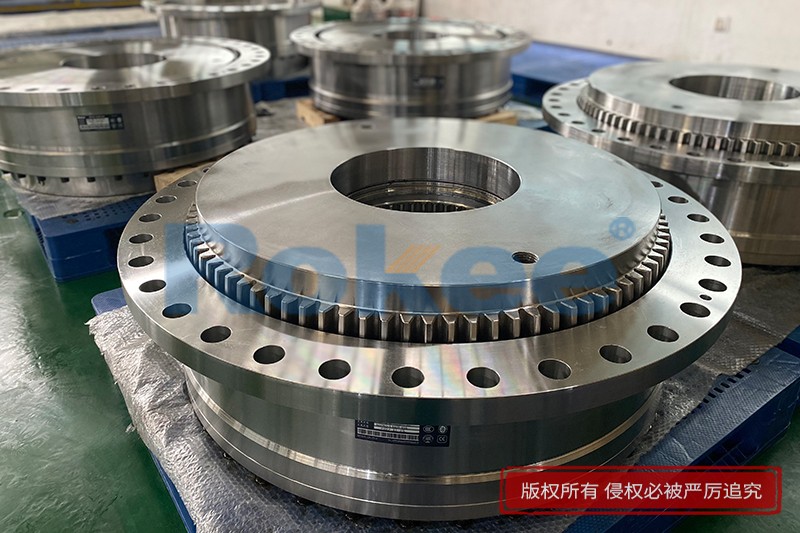
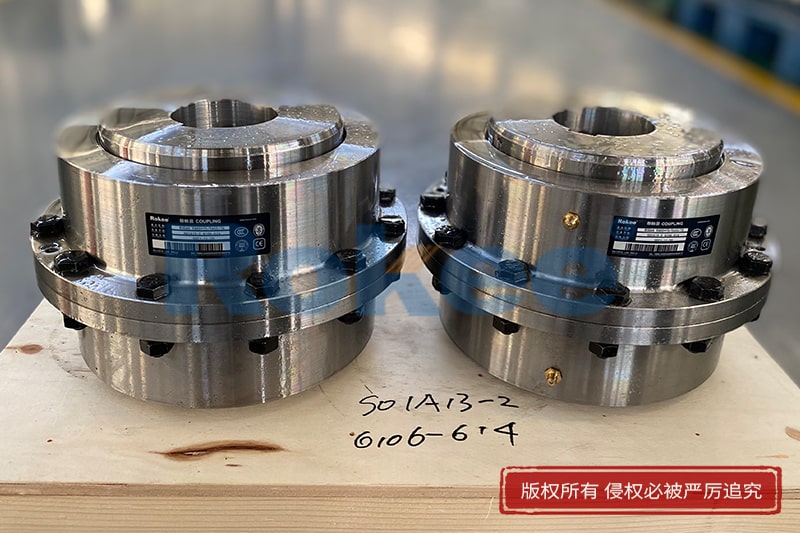
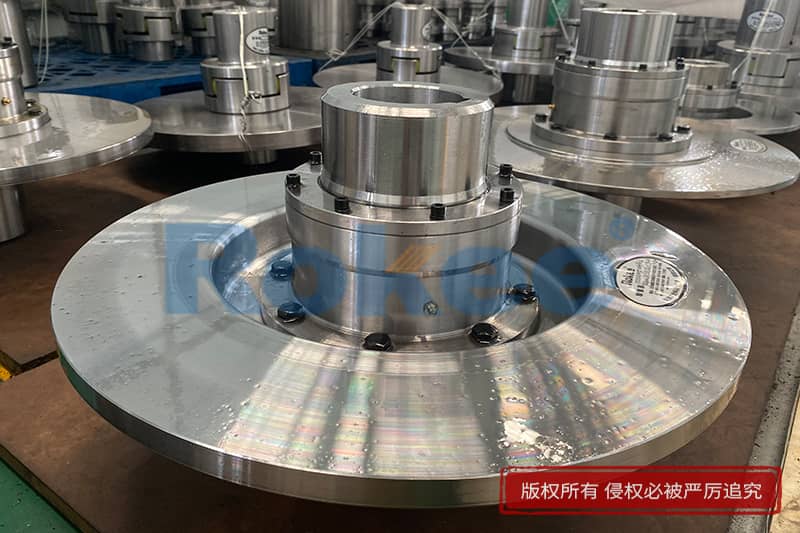

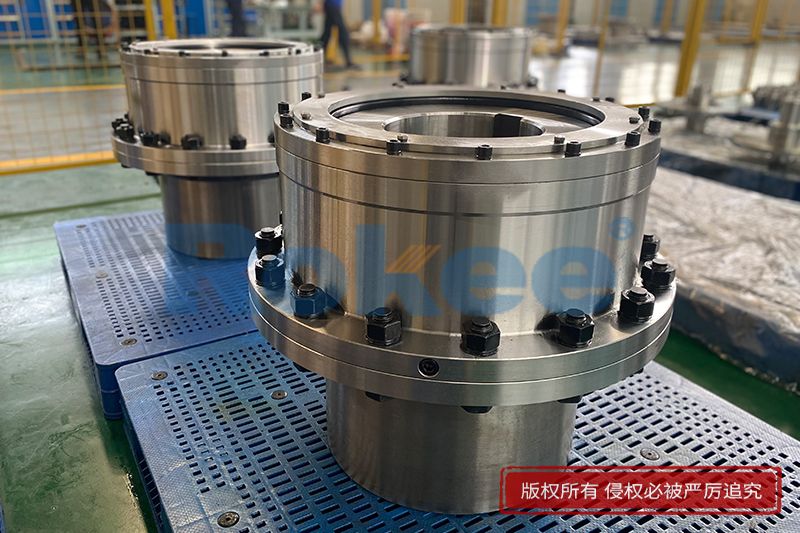
Curved Tooth Coupling can be applied into various general drive sites. Due to the special hook face drum gear design, in the definitive deviation scope, Curved Tooth Coupling can effectively avoid the edge stress concentration at tooth meshing, so it has outstanding radial and angular centering capacity. Moreover, Curved Tooth Coupling can ensure long service life.
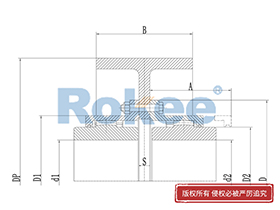
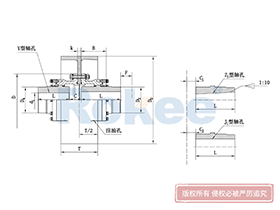
![RODX Drum Gear Coupling,Curved Tooth Couplings]()
RODX Drum Gear Coupling
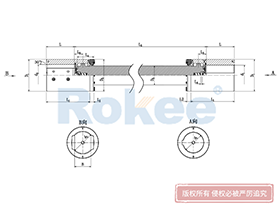
Intermediate Connecting Shaft
RODX Drum Gear Coupling is an extended type of ROD series coupling with a floating shaft design in the middle, suitable for increasing transmission distance.View More![RODP Drum Gear Coupling,Curved Tooth Couplings]()
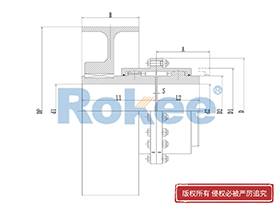
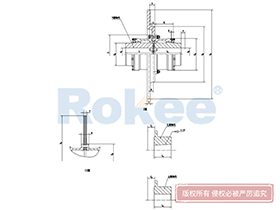
RODP Drum Gear Coupling
With Brake Discs
The RODP Drum Gear Coupling is a type of ROD series coupling with a brake disc, suitable for transmission situations where braking needs to be used in conjunction with disc brakes.View More![RODF Drum Gear Coupling,Curved Tooth Couplings]()
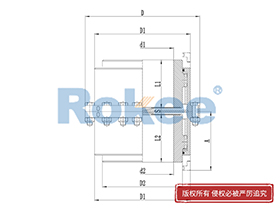
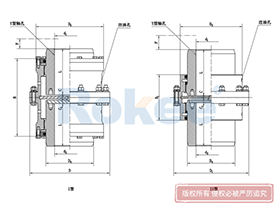
RODF Drum Gear Coupling
Split Type, Brake Disc
The RODF Drum Gear Coupling is a type of ROD series coupling with split brake discs, suitable for transmission situations where there is braking demand and the braking position changes when used in conjunction with disc brakes.View More![RODW Drum Gear Coupling,Curved Tooth Couplings]()
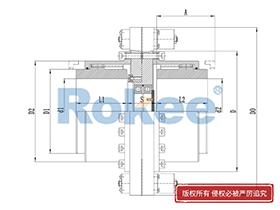
RODW Drum Gear Coupling
With Brake Wheel
The RODW Drum Gear Coupling is a type of ROD series coupling with brake wheels, suitable for transmission situations where braking needs to be used in conjunction with wheel brakes.View More![RODU Drum Gear Coupling,Curved Tooth Couplings]()
RODU Drum Gear Coupling
With Brake Wheel
The RODU Drum Gear Coupling is another type of ROD series coupling with brake wheels, suitable for transmission situations where braking needs to be used in conjunction with wheel brakes and applied to one end of the axle, achieving smoother and more reliable braking performance.View More![RODV Drum Gear Coupling,Curved Tooth Couplings]()
RODV Drum Gear Coupling
Vertical Installation
The RODV Drum Gear Coupling is a vertical installation type of the ROD series coupling, suitable for transmission situations that require vertical transmission torque.View More![RODM Drum Gear Coupling,Curved Tooth Couplings]()
RODM Drum Gear Coupling
Torsion Protection
The RODM Drum Gear Coupling is a torque setting form of the ROD series coupling. By adjusting relevant components, the maximum transmission torque can be easily set within a certain range. Suitable for shafting transmission situations that require safe torque operation to protect important machine components from excessive damage.View More![GICL Drum Gear Coupling,Curved Tooth Couplings]()
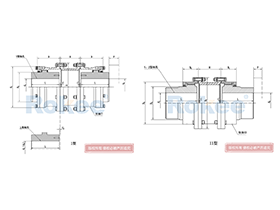
GICL Drum Gear Coupling
Wide
GICL Drum Gear Coupling has larger inner teeth width, which can transfer torque while compensating for larger axial displacement.View More![GICLZ Drum Gear Coupling,Curved Tooth Couplings]()
GICLZ Drum Gear Coupling
Connected to Intermediate Shaft
Half of the GICLZ Drum Gear Coupling adopts a non-toothed semi-coupling sleeve structure, which is usually connected in pairs or used in occasions with small angular displacement.View More![GIICL Drum Gear Coupling,Curved Tooth Couplings]()
GIICL Drum Gear Coupling
Narrow
GIICL Drum Gear Coupling has small inner teeth width, which can transfer torque while compensating for small axial displacement. Also, its structure is compact and the moment of inertia is low.View More![GIICLZ Drum Gear Coupling,Curved Tooth Couplings]()
GIICLZ Drum Gear Coupling
Connected to Intermediate Shaft
Half of the GIICLZ Drum Gear Coupling adopts a non-toothed semi-coupling sleeve structure, which is usually connected in pairs or used in occasions with small angular displacement. Also, its structure is compact and the moment of inertia is low.View More![GCLD Drum Gear Coupling,Curved Tooth Couplings]()
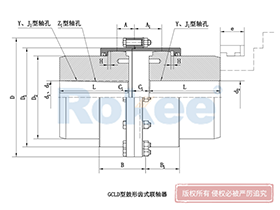
GCLD Drum Gear Coupling
Motor Shaft Extension
GCLD Drum Gear Coupling is generally used for direct connection with the motor, so it generally has a higher speed and compact structure.View More![NGCL Drum Gear Coupling,Curved Tooth Couplings]()
NGCL Drum Gear Coupling
With Brake Wheel
NGCL Drum Gear Coupling is designed with a brake wheel, suitable for situations where braking is required.View More![NGCLZ Drum Gear Coupling,Curved Tooth Couplings]()
NGCLZ Drum Gear Coupling
With Brake Wheel
NGCLZ Drum Gear Coupling is designed with a brake wheel, suitable for situations where braking is required. Half of its structure adopts a semi-coupling sleeve design, with smaller angular displacement compensation but more stable braking.View More![WG Drum Gear Coupling,Curved Tooth Couplings]()
WG Drum Gear Coupling
Basic
The overall characteristics of WG Drum Gear Coupling are similar to those of other drum gear couplings, but with a larger modulus design, which can generally transmit greater torque.View More![WGZ Drum Gear Coupling,Curved Tooth Couplings]()
WGZ Drum Gear Coupling
With Brake Wheel
WGZ Drum Gear Coupling is designed with a brake wheel, suitable for shoe type braking.View More![WGP Drum Gear Coupling,Curved Tooth Couplings]()
WGP Drum Gear Coupling
With Brake Discs
WGP Drum Gear Coupling is designed with a brake disc, suitable for disc type braking.View More![WGT Drum Gear Coupling,Curved Tooth Couplings]()
WGT Drum Gear Coupling
Intermediate Connecting Pipe
WGT Drum Gear Coupling is designed with indirect tube, suitable for long distance torque transfer.View More![WGC Drum Gear Coupling,Curved Tooth Couplings]()
WGC Drum Gear Coupling
Vertical Installation
WGC Drum Gear Coupling is specially designed for situations where vertical transmission is required, suitable for some vertical transmission systems.View More![WGJ Drum Gear Coupling,Curved Tooth Couplings]()
WGJ Drum Gear Coupling
Connected to Intermediate Shaft
WGJ Drum Gear Coupling is designed with intermediate shaft, suitable for long distance torque transmission, and some are equipped with axial buffers.View More
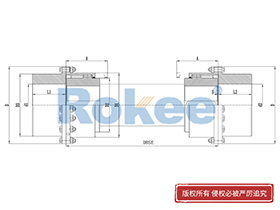
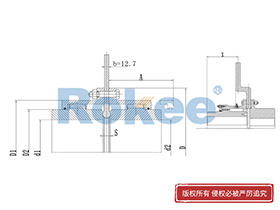
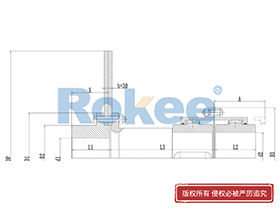
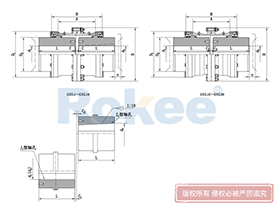
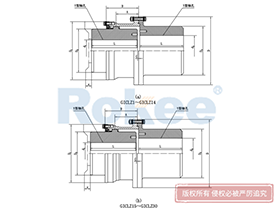
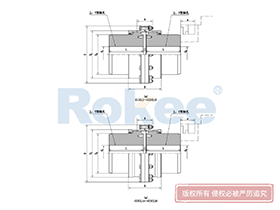
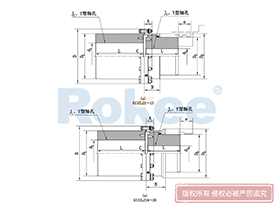
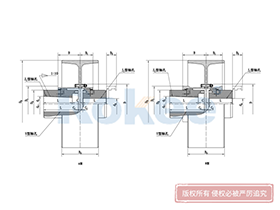
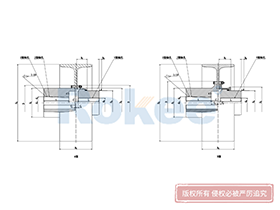
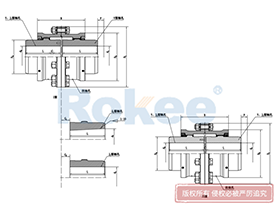
In the realm of mechanical power transmission, couplings serve as critical components that bridge rotating shafts, ensuring the efficient transfer of torque while accommodating inevitable misalignments. Among the diverse range of couplings available, the curved tooth coupling stands out for its unique design characteristics and superior performance in demanding industrial environments. Unlike rigid couplings that require precise shaft alignment or simple flexible couplings with limited torque capacity, curved tooth couplings combine robustness with flexibility, making them indispensable in applications ranging from heavy-duty manufacturing to precision aerospace systems.
1. Fundamental Principles of Curved Tooth Couplings
At its core, a curved tooth coupling is a type of flexible gear coupling designed to transmit torque between two rotating shafts while compensating for three primary types of misalignment: angular, parallel (radial), and axial misalignment. These misalignments often occur due to operational stresses, thermal expansion and contraction of components, installation errors, or dynamic movements of machinery. The key distinction between curved tooth couplings and their straight-tooth counterparts lies in the geometry of the tooth profile, which is the defining feature that enables their enhanced performance.
The working principle of a curved tooth coupling revolves around the meshing of curved external teeth on one shaft component with curved internal teeth on a mating component. A distinctive design feature is that the external teeth are typically machined to form a spherical surface, with the center of the sphere coinciding with the axis of the gear. This spherical geometry ensures that when misalignment occurs, the teeth maintain uniform contact across their surface, rather than concentrating stress at the edges—a common issue with straight-tooth couplings. The curved tooth profile also allows for a slightly larger tooth clearance compared to standard couplings, which not only facilitates smoother meshing but also enables the transmission of higher torque values. Additionally, this design leverages a double-cardanic operating principle, which minimizes the reaction forces generated by misalignment and prevents periodic fluctuations in angular velocity, ensuring stable and consistent power transmission.
Another critical principle underlying the functionality of curved tooth couplings is their ability to distribute load evenly across the tooth surfaces. This even load distribution reduces localized stress concentrations, thereby extending the service life of the coupling and enhancing the overall reliability of the transmission system. Unlike some flexible couplings that rely on elastomeric elements to absorb vibrations and accommodate misalignment, metallic curved tooth couplings achieve flexibility through mechanical design alone, making them suitable for high-temperature and high-pressure environments where elastomers would degrade.
2. Structural Design and Classification of Curved Tooth Couplings
The structural design of curved tooth couplings is tailored to meet the specific requirements of different applications, with variations in configuration, tooth profile, and component arrangement. Despite these variations, the basic structure typically consists of three main components: two hubs (each connected to a rotating shaft) and a sleeve (with internal teeth that mesh with the external teeth of the hubs). Some designs may also include a spacer sleeve, which facilitates easier maintenance by allowing the removal of shaft seals and bearings without disassembling the entire drive system.
2.1 Key Design Parameters
Several critical design parameters influence the performance of curved tooth couplings, including tooth profile, module (tooth size), number of teeth, tooth width, and spherical radius of the external teeth. The tooth profile is carefully optimized to ensure smooth meshing and maximum contact area; common profiles include involute curves and circular arcs, each offering specific advantages in terms of torque capacity and misalignment compensation. The module and number of teeth directly affect the torque-carrying capacity of the coupling—larger modules and more teeth result in higher torque transmission capabilities. The tooth width and spherical radius determine the maximum allowable misalignment: wider teeth and larger spherical radii enable greater angular and radial misalignment compensation.
Another important design consideration is the centering accuracy of the coupling. Curved tooth couplings utilize the elastic averaging principle, where the uniform contact between multiple curved teeth ensures precise self-centering of the shafts. This self-centering capability is particularly crucial in high-precision applications, such as aerospace engines and robotic systems, where even minor misalignments can lead to significant performance issues or component failure.
2.2 Classification Based on Construction
Curved tooth couplings can be classified into several types based on their construction and intended use:
1. Single Curve Couplings: These couplings feature a single set of curved teeth on the hubs, making them suitable for light to mid-duty applications. They are simple in design, easy to install, and capable of transmitting moderate torque loads. Common applications include small pumps, electric motors, and light conveyors.
2. Double Curve Couplings: Designed for heavy-duty applications, double curve couplings incorporate two sets of curved teeth, which significantly enhance their torque capacity and misalignment compensation capabilities. They are particularly well-suited for machinery subjected to frequent dynamic movements and high torque loads, such as construction vehicles (excavators, loaders), mining equipment, and steel rolling mills.
3. Crown Gear Couplings: A specialized type of curved tooth coupling, crown gear couplings have external teeth shaped like a crown (conical surface). They are designed to compensate for small to moderate angular misalignments and are often used in pairs for applications requiring compact design and low moment of inertia. Variations include models with narrow internal teeth for small axial displacement compensation and wider internal teeth for larger axial displacements.
3. Material Selection for Curved Tooth Couplings
The selection of materials for curved tooth couplings is critical to ensuring their performance, durability, and compatibility with operating environments. The primary materials used for coupling components (hubs, sleeves, and teeth) are metallic, with variations chosen based on the application's torque requirements, temperature range, and environmental conditions.
3.1 Common Metallic Materials: Steel is the most widely used material for curved tooth couplings due to its high strength, toughness, and wear resistance. Carbon steel and alloy steel (such as 40Cr, 45# steel) are commonly used for general industrial applications, offering a good balance of strength and cost-effectiveness. For high-temperature or high-corrosion environments, stainless steel is preferred, as it provides excellent resistance to oxidation and chemical degradation. In aerospace and high-precision applications, lightweight alloys such as titanium and aluminum are sometimes used to reduce the overall weight of the coupling, while maintaining sufficient strength.
3.2 Elastomeric Components (for Curved Jaw Couplings): Some curved tooth coupling variants, known as curved jaw couplings, incorporate elastomeric elements (spiders) between the hubs. These elements are typically made from urethane or rubber, which provide additional vibration damping and shock absorption. The choice of elastomeric material depends on the operating temperature range (typically from -40°F to +212°F for urethane) and resistance to oils, greases, and other environmental contaminants. Urethane is preferred for its high abrasion resistance and elasticity, making it suitable for applications with reversing loads and frequent start-stop cycles.
3.3 Material Treatment: To enhance the wear resistance and fatigue strength of curved tooth couplings, components are often subjected to heat treatment processes such as carburizing, quenching, and tempering. These processes harden the tooth surfaces, reducing wear during meshing, while maintaining the toughness of the core material to withstand impact loads. Surface treatments such as galvanizing or chrome plating may also be applied to prevent corrosion in harsh environments, such as marine or chemical processing applications.
4. Applications of Curved Tooth Couplings Across Industries
The unique combination of high torque capacity, excellent misalignment compensation, and durability makes curved tooth couplings suitable for a wide range of industrial and specialized applications. From heavy-duty manufacturing to precision aerospace systems, these couplings play a vital role in ensuring reliable power transmission.
4.1 Heavy Industry: In heavy industries such as steel manufacturing, mining, and cement production, curved tooth couplings are used in machinery such as rolling mills, crushers, conveyors, and cement kilns. These applications require the transmission of high torque values and must accommodate significant misalignments caused by the heavy loads and dynamic movements of the equipment. Double curve couplings are particularly prevalent in these settings, as they can withstand the extreme operating conditions and provide long service life with minimal downtime.
4.2 Aerospace and Defense: The aerospace industry relies on curved tooth couplings for critical applications such as aircraft engines, landing gear systems, and control actuators. In these applications, the couplings must provide precise torque transmission, high centering accuracy, and resistance to extreme temperatures and pressures. Curved tooth couplings used in aerospace systems are often made from lightweight alloys and undergo rigorous testing to ensure reliability in safety-critical environments. For example, they are used to connect the shafts of gas turbine engines, where their self-centering capability and high stiffness are essential for maintaining rotor dynamics.
4.3 Marine Industry: Ships and offshore vessels utilize curved tooth couplings in propulsion systems, power generators, and pump systems. The marine environment is particularly challenging due to the presence of saltwater, humidity, and dynamic movements of the vessel, which cause significant misalignments. Curved tooth couplings used in marine applications are typically made from corrosion-resistant materials such as stainless steel and are designed to compensate for axial, radial, and angular misalignments, ensuring smooth power transmission even in rough sea conditions.
4.4 Pump and Compressor Systems: In oil and gas, chemical processing, and water treatment industries, curved tooth couplings are widely used in pump and compressor systems. These applications require reliable torque transmission to drive the pumps, which often handle high-viscosity fluids or fluids containing particles. Curved tooth couplings compensate for misalignments between the motor and pump shafts, reducing wear on bearings and seals and improving the overall efficiency of the system. Curved jaw couplings, with their elastomeric elements, are particularly suitable for these applications as they dampen vibrations and absorb shock loads.
4.5 Robotics and Precision Machinery: The growing field of robotics relies on curved tooth couplings for actuators and joints, where precise motion control is essential. These couplings provide a combination of torque transmission, flexibility, and compact design, making them ideal for robotic arms and wheels. The self-centering capability of curved tooth couplings ensures accurate positioning, while their low moment of inertia allows for rapid and precise movements.
4.6 Construction and Off-Road Vehicles: Construction vehicles such as excavators, loaders, and concrete pumps use curved tooth couplings as shock absorbers in their power transmission systems. The dynamic and uneven terrain of construction sites causes frequent misalignments and shock loads, which the curved tooth profile can accommodate effectively. The robust construction of these couplings ensures they can withstand the harsh conditions of construction and off-road applications.
5. Maintenance and Troubleshooting of Curved Tooth Couplings
Proper maintenance is essential to ensure the long-term performance and reliability of curved tooth couplings. The maintenance requirements vary depending on the type of coupling (metallic vs. elastomeric) and the operating environment, but some general practices apply to most configurations.
5.1 Lubrication: Metallic curved tooth couplings (such as gear-type couplings) require regular lubrication to reduce friction between the meshing teeth and prevent wear. High-quality grease or oil is typically used, with the lubrication interval determined by the operating speed, torque, and temperature. It is important to ensure that the lubricant fills the tooth gaps completely, as insufficient lubrication can lead to metal-to-metal contact, increased wear, and premature failure. Some couplings are equipped with sealed designs to retain lubricant and prevent contamination, reducing the frequency of lubrication checks.
5.2 Inspection and Monitoring: Regular visual inspections should be conducted to check for signs of wear, damage, or misalignment. Key areas to inspect include the tooth surfaces (for pitting, scuffing, or chipping), shaft connections (for looseness), and seals (for leaks). In addition to visual inspections, vibration analysis can be used to detect early signs of coupling wear or misalignment. Excessive vibration may indicate uneven tooth contact, worn components, or improper alignment, which should be addressed promptly to prevent further damage to the coupling or other system components.
5.3 Alignment Checks: Despite their ability to compensate for misalignment, curved tooth couplings perform best when the shafts are aligned as closely as possible. Periodic alignment checks using laser alignment tools or dial indicators can help ensure that the misalignment remains within the coupling's allowable limits. Adjustments should be made if the misalignment exceeds the recommended values, as excessive misalignment can increase stress on the teeth and reduce the coupling's service life.
5.4 Replacement of Components: For curved jaw couplings with elastomeric elements, the spider (elastomeric component) is a wear part that may need periodic replacement. Signs of spider wear include cracks, hardness loss, or excessive compression. It is important to replace the spider with a compatible component to maintain the coupling's performance characteristics. For metallic couplings, worn or damaged teeth or hubs should be replaced immediately to prevent catastrophic failure.
5.5 Troubleshooting Common Issues: Common problems with curved tooth couplings include excessive noise, vibration, and premature wear. Excessive noise is often caused by insufficient lubrication, worn teeth, or misalignment. Vibration may indicate improper alignment, unbalanced shafts, or worn components. Premature wear can be attributed to inadequate lubrication, contamination, or operating beyond the coupling's torque or misalignment limits. Addressing these issues promptly through proper lubrication, alignment, or component replacement can extend the life of the coupling and prevent costly downtime.
6. Advancements and Future Trends in Curved Tooth Coupling Technology
Recent advancements in manufacturing technology, materials science, and design engineering have led to significant improvements in curved tooth coupling performance, reliability, and versatility. These advancements are driven by the increasing demand for more efficient, compact, and durable power transmission components in a wide range of industries.
6.1 CAD/CAM and Parametric Design: The use of computer-aided design (CAD) and computer-aided manufacturing (CAM) technologies has revolutionized the design and production of curved tooth couplings. Parametric design tools allow engineers to create mathematical models of the tooth profiles and coupling components, enabling precise optimization of the design for specific applications. These models can also be used to predict contact patterns between the teeth, ensuring uniform load distribution and minimizing wear. CAM technologies, such as CNC machining, enable the production of complex curved tooth profiles with high precision, reducing manufacturing errors and improving the consistency of coupling performance.
6.2 Advanced Materials and Coatings: The development of new materials and surface coatings has enhanced the performance of curved tooth couplings in extreme environments. For example, the use of composite materials (such as carbon fiber-reinforced polymers) offers the potential for lighter, stronger couplings that are resistant to corrosion and high temperatures. Advanced surface coatings, such as diamond-like carbon (DLC) coatings, provide superior wear resistance and reduced friction, further extending the service life of the coupling.
6.3 Maintenance-Free Designs: There is a growing trend toward maintenance-free curved tooth couplings, particularly in applications where access for maintenance is difficult or costly. Sealed, lubricated-for-life designs eliminate the need for regular lubrication, reducing maintenance requirements and downtime. These designs use high-performance lubricants and robust seals to retain lubricant and prevent contamination, ensuring reliable operation for extended periods.
6.4 Integration with Smart Monitoring Systems: The integration of smart sensors and monitoring systems into curved tooth couplings is an emerging trend that enables predictive maintenance. Sensors embedded in the coupling can measure temperature, vibration, and torque, providing real-time data on the coupling's performance. This data can be analyzed using machine learning algorithms to detect early signs of wear or failure, allowing maintenance to be scheduled proactively rather than reactively. This approach reduces downtime, improves system reliability, and optimizes maintenance costs.
6.5 Miniaturization and Lightweight Design: For applications such as robotics, aerospace, and portable machinery, there is a growing demand for miniaturized, lightweight curved tooth couplings. Advances in materials and manufacturing technologies have enabled the production of smaller couplings with high torque capacity, making them suitable for compact power transmission systems. Lightweight materials such as titanium and aluminum alloys are increasingly used to reduce the overall weight of the coupling, improving the efficiency and performance of the entire system.
7. Conclusion
Curved tooth couplings are essential components in modern mechanical power transmission systems, offering a unique combination of high torque capacity, excellent misalignment compensation, and durability. Their versatile design and wide range of material options make them suitable for applications across diverse industries, from heavy-duty manufacturing to precision aerospace systems. Proper design, material selection, and maintenance are critical to ensuring the optimal performance and reliability of curved tooth couplings, minimizing downtime and reducing operating costs.
As technology continues to advance, curved tooth couplings are evolving to meet the changing demands of industrial and specialized applications. Advancements in CAD/CAM design, advanced materials, maintenance-free designs, smart monitoring, and miniaturization are driving improvements in performance, efficiency, and reliability. These innovations will ensure that curved tooth couplings remain a vital component in power transmission systems for years to come, supporting the development of more efficient, compact, and reliable machinery across the globe.
« Curved Tooth Couplings » Post Date: 2023/12/13
URL: //5008517517.com/en/tags/curved-tooth-couplings.html