Barrel Gear Couplings
Rokee is Barrel Gear Couplings Manufacturer, Customizable according to the barrel gear couplings drawings provided by the customer, Support Export.
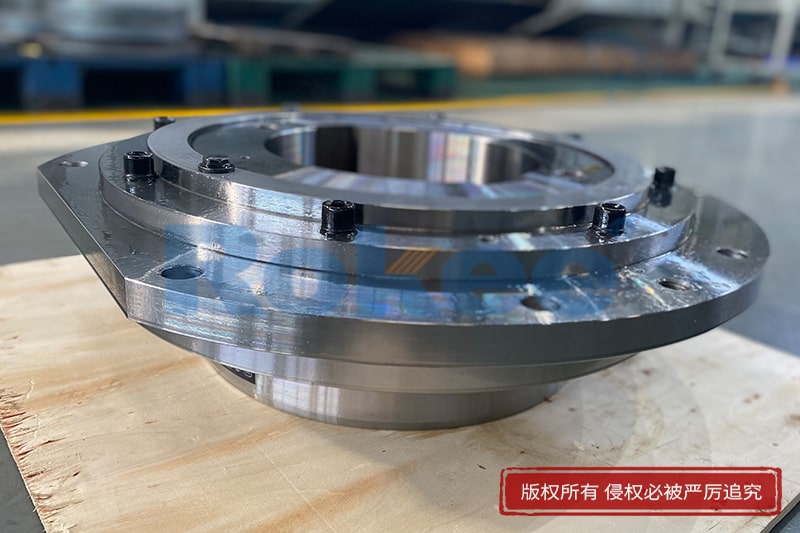
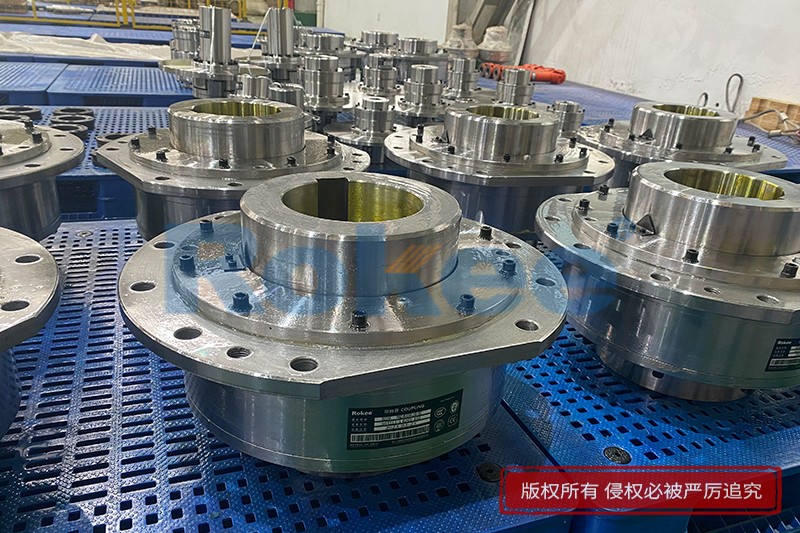
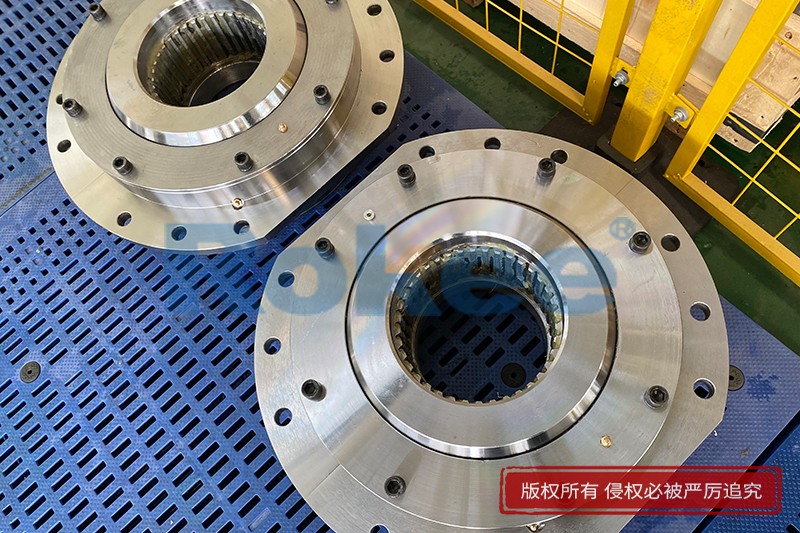
Barrel Gear Coupling is the crane drum coupling. The internal sphere gear sleeve is assembled with the external drum perfectly. Relying on the specially designed key, the external sphere shaft sleeve forms the entirety with gear sleeve perfectly. It will promote the reliable connection of reducer shaft and drum and it is the most ideal product in the market home and abroad at present.
![RWC Drum Coupling,Barrel Gear Couplings]()
RWC Drum Coupling
Ball and Drum Gear
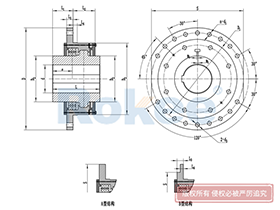
The ball and drum gear drum coupling is a drum coupling developed by Rokee with a more reliable structure, higher compensation ability and higher safety factor. The outer sleeve adopts a spherical drum tooth design, which has low requirements for shafting installation accuracy, large transmission torque, strong overload capacity and can withstand great radial load. The connection size is the same as that of DC series, but the bearing capacity is increased by more than 30%. The innovative spherical sealing technology makes this type of product maintain excellent lubrication and greatly improve its service life.View More![DQ/WZL Drum Coupling,Barrel Gear Couplings]()
DQ/WZL Drum Coupling
Ball Dumpling
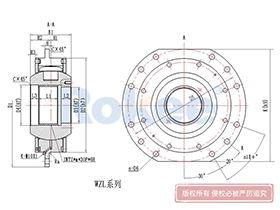
WZL Drum Coupling is a spherical hinged coupling. It has a connecting flange with an inner spherical surface, a spherical semi-coupling sleeve with an outer spherical surface, a special transmission key, an inner and outer limit cover, etc. The internal control generally adopts the splined sleeve design, which transmits torque through a specially designed key bar and can withstand large torque and radial load. The maximum angular displacement compensation can reach 3°, with a life indicator and safe and reliable structure.View More![DC Drum Coupling,Barrel Gear Couplings]()
DC Drum Coupling
Drum-type
DC Drum Coupling is designed with drum teeth, which is used for connecting the reducer of crane transmission system with the drum. It can bear radial load and transfer large torque, but cannot transfer axial load.View More![WJ Drum Coupling,Barrel Gear Couplings]()
WJ Drum Coupling
Spherical Roller
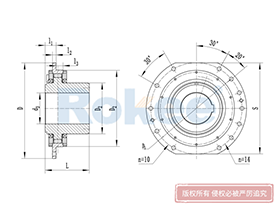
WJ Drum Coupling is a spherical roller coupling, which is composed of jacket with connecting flange, spherical roller, semi-coupling, inner and outer cover plate and sealing system, capable of transmitting large torque and bearing radial load.View More![WJA Drum Coupling,Barrel Gear Couplings]()
WJA Drum Coupling
Spherical Roller
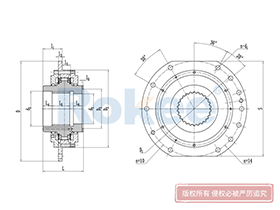
WJA Drum Coupling is a spherical roller coupling, which is composed of jacket with connecting flange, spherical roller, semi-coupling, inner and outer cover plate and sealing system, capable of transmitting large torque and bearing radial load. The connection between the coupling and the output shaft of the reducer adopts an involute spline pair design.View More
In the realm of industrial power transmission, couplings serve as the critical link between rotating shafts, enabling the seamless transfer of torque while accommodating inevitable misalignments. Among the diverse range of coupling technologies available, the barrel gear coupling stands out for its exceptional ability to handle high torque loads, compensate for multiple types of shaft misalignment, and operate reliably in harsh industrial environments. From heavy-duty manufacturing plants to renewable energy facilities, this mechanical component plays an indispensable role in ensuring the efficiency and durability of rotating machinery.
1. Definition and Core Structural Characteristics
A barrel gear coupling is a type of rigid-flexible coupling designed specifically for transmitting high torque between two non-collinear rotating shafts. Its defining feature lies in the barrel-shaped profile of its external teeth, which are machined to form a spherical surface with the center of the sphere aligned along the gear's axis. This unique geometric design distinguishes it from standard gear couplings and endows it with superior misalignment compensation capabilities. Unlike rigid couplings that require precise shaft alignment, barrel gear couplings can accommodate angular, radial, and axial misalignments simultaneously, making them ideal for applications where shaft deviation is unavoidable due to thermal expansion, structural deformation, or installation limitations.
The basic structure of a barrel gear coupling typically consists of four main components: two half-couplings (each connected to a shaft), an outer sleeve with internal teeth, and a sealing system. The half-couplings are equipped with external barrel-shaped teeth that mesh with the internal teeth of the outer sleeve. The tooth clearance of barrel gear couplings is slightly larger than that of conventional gear couplings, which not only facilitates the accommodation of misalignments but also reduces the risk of tooth jamming during operation. The sealing system, usually composed of lip seals and cover plates, plays a vital role in preventing the ingress of contaminants such as dust, moisture, and industrial debris, while also retaining the lubricant necessary for reducing friction and wear between meshing teeth.
Material selection is a critical aspect of barrel gear coupling design, as it directly impacts the component's torque capacity, durability, and resistance to harsh operating conditions. Most barrel gear couplings are constructed from high-strength alloy steels, which undergo heat treatment processes such as quenching and tempering to enhance hardness, toughness, and wear resistance. In some specialized applications, where corrosion resistance is a primary concern (e.g., marine or chemical environments), materials such as stainless steel may be used. The choice of material is always tailored to the specific operating parameters of the application, including torque requirements, operating temperature, and exposure to corrosive substances.
2. Working Principle of Barrel Gear Couplings
The fundamental working principle of a barrel gear coupling revolves around the meshing of its barrel-shaped external teeth with the internal teeth of the outer sleeve to transmit torque between two shafts. When the driving shaft rotates, it imparts rotational motion to the corresponding half-coupling. The barrel-shaped teeth of this half-coupling engage with the internal teeth of the outer sleeve, causing the outer sleeve to rotate. This rotational motion is then transferred to the second half-coupling (connected to the driven shaft) via the same meshing mechanism, thereby completing the torque transmission process.
The key advantage of the barrel-shaped tooth profile becomes evident in its handling of shaft misalignments. For angular misalignment (where the two shafts are not collinear but intersect at a common point), the spherical curvature of the barrel teeth allows for smooth meshing between the teeth of the half-couplings and the outer sleeve, even when the shafts are at an angle. This curvature ensures that the contact area between the teeth remains consistent, minimizing localized stress concentrations and preventing premature wear. In the case of radial misalignment (where the shafts are parallel but offset from each other), the larger tooth clearance and barrel profile enable the teeth to slide slightly within the meshing interface, accommodating the offset without compromising torque transmission.
Axial misalignment (axial movement of the shafts) is also addressed by the design of barrel gear couplings. The meshing teeth can absorb small amounts of axial displacement, and in some designs, the outer sleeve is allowed to move slightly along the axial direction to compensate for thermal expansion or contraction of the shafts during operation. Additionally, the lubrication system (typically consisting of grease or oil injected via an oil cup) ensures that the meshing surfaces remain well-lubricated, reducing friction and wear, and extending the service life of the coupling.
Another important functional aspect of some barrel gear coupling designs is the integration of wear indicators. These indicators, which may be mechanical or visual, allow operators to monitor the wear status of the teeth and the axial position of the outer sleeve relative to the half-couplings. This proactive monitoring capability helps prevent unexpected coupling failures, which can lead to costly downtime in industrial operations.
3. Classification of Barrel Gear Couplings
Barrel gear couplings can be classified into several categories based on different criteria, including structural design, flexibility, installation orientation, and application-specific features. The following are the most common classification types:
3.1 Based on Flexibility
1. Rigid Barrel Gear Couplings: These couplings rely solely on the barrel tooth profile for misalignment compensation and do not incorporate additional elastic components. They are characterized by high torque capacity and rigidity, making them suitable for heavy-duty applications such as steel mills, mining machinery, and large-scale compressors. Rigid barrel gear couplings are ideal for applications where the misalignment is relatively small and high torque transmission is the primary requirement.
2. Flexible Barrel Gear Couplings: These couplings integrate elastic elements (such as rubber pads or elastic sleeves) between the half-couplings and the outer sleeve. The elastic elements enhance the coupling's ability to absorb vibration and shock, reducing the transmission of vibration from the driving shaft to the driven shaft. This makes them suitable for applications where vibration damping is important, such as wind turbines, pumps, and electrical generators. Flexible barrel gear couplings also offer better protection for the connected machinery, reducing wear and tear on bearings and other components.
3.2 Based on Installation Orientation
1. Horizontal Installation Barrel Gear Couplings: These are the most common type, designed for use in horizontal shaft arrangements, which are prevalent in most industrial machinery such as conveyors, mixers, and machine tools. The design of horizontal installation couplings focuses on stable torque transmission and efficient compensation for horizontal misalignments.
2. Vertical Installation Barrel Gear Couplings: These couplings are specifically designed for vertical shaft arrangements, such as vertical pumps, vertical turbines, and some types of crane lifting mechanisms. The vertical design must account for the effects of gravity on the coupling components, ensuring that the meshing teeth remain properly aligned and lubricated. Vertical barrel gear couplings often feature specialized sealing systems to prevent lubricant leakage due to the vertical orientation.
3.3 Based on Application-Specific Features
1. Torsion-Protected Barrel Gear Couplings: These couplings are equipped with torsion limiters or shear pins that protect the coupling and connected machinery from overloads. In the event of a sudden torque spike (e.g., due to a jammed driven component), the torsion limiter or shear pin will break or disengage, preventing damage to the coupling, shafts, and other critical components. They are widely used in machinery where overloads are a potential risk, such as material handling equipment and crushers.
2. High-Temperature Resistant Barrel Gear Couplings: Designed for use in high-temperature environments (e.g., furnaces, steam turbines, and exhaust systems), these couplings are constructed from heat-resistant materials and feature high-temperature lubricants and sealing systems. The materials used (such as heat-resistant alloy steels) retain their mechanical properties even at elevated temperatures, ensuring reliable operation.
4. Key Industrial Applications of Barrel Gear Couplings
Due to their high torque capacity, excellent misalignment compensation, and durability, barrel gear couplings find applications across a wide range of industries. The following are the most prominent application areas:
4.1 Heavy Machinery and Mining
The mining industry relies heavily on large-scale machinery such as excavators, conveyors, crushers, and grinding mills, all of which require efficient torque transmission between shafts. Barrel gear couplings are ideal for these applications due to their ability to handle the high torque loads generated by these machines and accommodate the misalignments that occur due to the heavy vibrations and structural movement of the equipment. In addition, the rugged construction of barrel gear couplings makes them resistant to the harsh mining environment, which is characterized by dust, moisture, and abrasive particles.
4.2 Steel and Metallurgy
Steel mills and metallurgical plants operate a variety of heavy-duty equipment, including rolling mills, blast furnaces, and continuous casting machines. These applications require couplings that can transmit extremely high torques and withstand high temperatures. Barrel gear couplings (particularly rigid types) are widely used in rolling mills, where they connect the motor to the rolling stands, transmitting the torque required to deform the steel. The misalignment compensation capability of barrel gear couplings is also crucial in these applications, as the thermal expansion of the shafts during operation can cause significant axial and angular misalignments.
4.3 Crane and Hoisting Equipment
Cranes and hoisting equipment (such as gantry cranes, overhead cranes, and winches) rely on barrel gear couplings to connect the reducer output shaft to the drum. In these applications, the coupling not only transmits the torque required to lift and lower heavy loads but also restricts the axial movement of the drum, ensuring safe and stable operation. The barrel gear coupling's ability to handle radial loads (generated by the tension of the lifting rope or chain) is particularly important in crane applications. Additionally, the wear indicators integrated into some designs allow for regular inspection, ensuring the safety of the hoisting operation.
4.4 Energy and Power Generation
The energy sector, including thermal power plants, hydropower plants, wind farms, and nuclear power facilities, uses barrel gear couplings in various applications. In thermal power plants, they are used in boilers, turbines, and generators, transmitting torque between the turbine and generator shafts. In wind farms, flexible barrel gear couplings are used in wind turbines to connect the rotor to the gearbox, absorbing the vibration generated by the rotating rotor and compensating for misalignments caused by wind load variations. Hydropower plants use barrel gear couplings in water turbines, where they handle high torque loads and accommodate misalignments due to the movement of the turbine shaft.
4.5 Chemical and Petroleum Industry
The chemical and petroleum industry involves the use of pumps, compressors, mixers, and pipelines that operate in harsh environments (high pressure, high temperature, and corrosive substances). Barrel gear couplings used in these applications are often constructed from corrosion-resistant materials (such as stainless steel) and feature specialized sealing systems to prevent the ingress of corrosive fluids. They are used to connect the motors to pumps and compressors, ensuring reliable torque transmission and minimizing downtime due to coupling failures.
4.6 General Manufacturing and Machinery
In general manufacturing, barrel gear couplings are used in a variety of machinery, including machine tools (lathes, milling machines, grinders), conveyors, and mixers. They ensure precise torque transmission and accommodate the small misalignments that may occur due to the wear of machine components or temperature changes during operation. The versatility of barrel gear couplings makes them a popular choice in many manufacturing processes, where reliability and efficiency are key.
5. Installation and Maintenance of Barrel Gear Couplings
Proper installation and regular maintenance are critical to ensuring the optimal performance and long service life of barrel gear couplings. Improper installation can lead to increased wear, reduced torque transmission efficiency, and premature failure, while inadequate maintenance can result in unexpected downtime and costly repairs. The following are the key steps and considerations for installation and maintenance:
5.1 Installation Preparation
Before installation, it is essential to inspect the coupling components (half-couplings, outer sleeve, seals, bolts) for any damage, such as cracks, corrosion, or tooth wear. The tooth surfaces should be smooth and free of burrs or debris. It is also important to check the dimensions of the shaft holes and keyways of the half-couplings to ensure they match the dimensions of the shafts and keys, as improper fit can lead to excessive stress and wear.
The installation site should be clean and free of dust, debris, and oil, as contaminants can enter the coupling during installation and cause damage to the meshing teeth. The shafts should be cleaned to remove any rust, oil, or dirt from the surface, and the shaft ends should be smooth and flat to ensure a tight fit with the half-couplings.
Prior to installation, the axial movement, radial runout, and coaxiality of the two shafts should be measured using precision tools such as dial indicators or micrometers. This measurement helps determine the amount of misalignment that the coupling will need to accommodate and ensures that the misalignment is within the allowable range specified by the coupling design.
5.2 Installation Process
1. Mount the half-couplings on the respective shafts: Align the keyway of each half-coupling with the key on the shaft, then slide the half-coupling onto the shaft until it is in contact with the shaft shoulder. Avoid using excessive force (such as hammering) during this process, as it can damage the shaft or the coupling. If necessary, use a hydraulic press or heating (with proper temperature control) to facilitate the installation.
2. Install the outer sleeve: Position the outer sleeve over the two half-couplings, ensuring that the internal teeth of the outer sleeve mesh properly with the barrel-shaped external teeth of the half-couplings. In some designs, the outer sleeve may need to be split (split outer sleeve) to facilitate installation, which is then bolted together once in place.
3. Adjust coaxiality: Use precision measuring tools to check the coaxiality of the two shafts after the coupling is partially installed. Adjust the position of the shafts (by adding shims under the motor or driven equipment base) to reduce misalignment. The adjustment should follow the principle of first adjusting axial misalignment, then radial misalignment, and finally angular misalignment. The allowable coaxiality error typically ranges from 0.05mm to 0.10mm for axial deviation, 0.10mm or less for radial deviation, and 0.2° or less for angular deviation, depending on the coupling size and application.
4. Secure the coupling: Once the coaxiality is adjusted to within the allowable range, tighten the connecting bolts of the half-couplings and outer sleeve using a torque wrench. The bolts should be tightened in a diagonal cross pattern to ensure uniform force distribution, preventing uneven stress on the coupling components. After tightening, recheck the coaxiality to ensure that the adjustment was not disturbed.
5. Install the sealing system and lubricate: Mount the cover plates and lip seals to ensure a tight seal. Inject the appropriate lubricant (grease or oil) into the coupling via the oil cup, ensuring that all meshing teeth are well-lubricated. The type of lubricant should be selected based on the operating temperature, load, and environment of the application.
5.3 Maintenance and Inspection
Regular inspection and maintenance are essential to extend the service life of barrel gear couplings. The following are the key maintenance activities:
1. Routine Inspection: Conduct visual inspections of the coupling regularly (weekly or monthly, depending on the application) to check for signs of wear, damage, or leakage. Inspect the sealing system for lubricant leakage, the teeth for wear or pitting, and the bolts for tightness. Use the wear indicators (if available) to monitor the wear status of the teeth.
2. Lubrication Maintenance: Regularly check the lubricant level and quality. Replace the lubricant at specified intervals (typically every 6 to 12 months, or as recommended by the operating conditions). When replacing the lubricant, clean the coupling interior to remove any debris or old lubricant before adding new lubricant.
3. Torque Check: Periodically recheck the tightness of the connecting bolts, as vibration during operation can cause bolts to loosen over time. Retighten the bolts to the specified torque if necessary.
4. Dismantling and Overhaul: For long-term operation, the coupling should be dismantled and overhauled at regular intervals (every 2 to 5 years). During overhaul, inspect all components for wear and damage, replace worn or damaged parts (such as seals, bolts, or teeth), and recondition the meshing surfaces if necessary.
5. Storage and Protection: If the coupling is not in use for an extended period, it should be stored in a dry, dust-free environment with a relative humidity of less than 50%. The coupling should be protected from collisions during storage, and the surface should be coated with anti-rust oil to prevent corrosion. Additionally, the lubricant should be drained or replenished before storage, depending on the storage duration.
6. Emerging Trends and Future Developments
The barrel gear coupling industry is constantly evolving to meet the changing needs of industrial applications, driven by advancements in materials science, manufacturing technology, and the growing demand for efficiency and sustainability. The following are the key emerging trends:
6.1 Development of High-Performance Materials
The use of advanced materials is a major trend in the development of barrel gear couplings. Manufacturers are increasingly using high-strength, lightweight alloys and composite materials to improve the torque capacity and durability of couplings while reducing their weight. For example, the use of carbon fiber-reinforced composites in some coupling components can reduce weight by up to 30% compared to traditional steel components, improving energy efficiency in applications such as wind turbines and aerospace.
Additionally, the development of corrosion-resistant and high-temperature-resistant materials is expanding the application range of barrel gear couplings. New alloy materials with enhanced resistance to corrosion and high temperatures are being used in chemical, petroleum, and high-temperature industrial applications, extending the service life of couplings in these harsh environments.
6.2 Integration of Smart Monitoring Technologies
The integration of smart monitoring technologies (such as sensors and IoT connectivity) into barrel gear couplings is becoming increasingly common. These smart couplings are equipped with sensors that monitor key parameters such as temperature, vibration, torque, and tooth wear in real time. The data collected by the sensors is transmitted to a central monitoring system, allowing operators to remotely monitor the performance of the coupling and predict potential failures.
This predictive maintenance capability helps reduce unplanned downtime, lower maintenance costs, and improve the overall efficiency of industrial operations. For example, in wind farms, smart barrel gear couplings can monitor the vibration and torque loads, alerting operators to potential issues before they lead to coupling failure, which can be costly to repair in remote wind farm locations.
6.3 Focus on Sustainability and Energy Efficiency
Sustainability and energy efficiency are becoming key priorities in industrial design, and barrel gear couplings are no exception. Manufacturers are developing more energy-efficient coupling designs by optimizing the tooth profile to reduce friction and improve torque transmission efficiency. Additionally, the use of lightweight materials reduces the energy required to rotate the coupling, improving the overall energy efficiency of the machinery.
Another aspect of sustainability is the development of recyclable couplings. Manufacturers are designing couplings with components that can be easily disassembled and recycled, reducing the environmental impact of coupling disposal. Additionally, the use of long-lasting materials and improved lubricants reduces the frequency of component replacement, further reducing waste.
6.4 Customization for Specialized Applications
As industrial applications become more specialized, the demand for customized barrel gear couplings is growing. Manufacturers are offering tailor-made coupling solutions designed to meet the specific requirements of individual applications, such as unique torque capacities, misalignment compensation needs, or environmental conditions. For example, customized couplings for deep-sea mining applications must be designed to withstand high pressure and corrosive seawater, while couplings for space applications must be lightweight and able to operate in vacuum environments.
6.5 Advancements in Manufacturing Technology
Advancements in manufacturing technology, such as 3D printing and precision machining, are improving the quality and performance of barrel gear couplings. 3D printing allows for the production of complex coupling components with intricate geometries that are difficult to manufacture using traditional methods. This technology also enables rapid prototyping, reducing the time required to develop new coupling designs.
Precision machining technologies (such as CNC machining and grinding) are improving the accuracy of the tooth profile and dimensional tolerance of barrel gear couplings, ensuring better meshing performance and misalignment compensation. Additionally, automated manufacturing processes are reducing production costs and improving the consistency of coupling quality.
7. Conclusion
Barrel gear couplings are essential components in industrial power transmission systems, offering exceptional torque transmission capacity, superior misalignment compensation, and reliability in harsh operating environments. Their unique barrel-shaped tooth profile and robust construction make them suitable for a wide range of applications, from heavy machinery and mining to renewable energy and chemical processing.
Proper installation and maintenance are critical to ensuring the optimal performance and long service life of barrel gear couplings. By following the recommended installation procedures and implementing regular maintenance protocols, operators can minimize downtime and reduce maintenance costs.
Looking to the future, the barrel gear coupling industry is poised for significant growth, driven by advancements in materials science, smart monitoring technologies, and the growing demand for efficiency and sustainability. The development of high-performance materials, smart couplings, and customized solutions will continue to expand the application range of barrel gear couplings and improve their performance, making them an even more indispensable component in the industrial landscape.
As industries continue to evolve and demand higher levels of efficiency, reliability, and sustainability, barrel gear couplings will remain at the forefront of power transmission technology, playing a critical role in powering the machinery that drives global industrial growth.
« Barrel Gear Couplings » Post Date: 2023/7/12
URL: //5008517517.com/en/tags/BarrelGearCouplings.html