Crown Gear Couplings
Rokee is Crown Gear Couplings Manufacturer, Customizable according to the crown gear couplings drawings provided by the customer, Support Export.

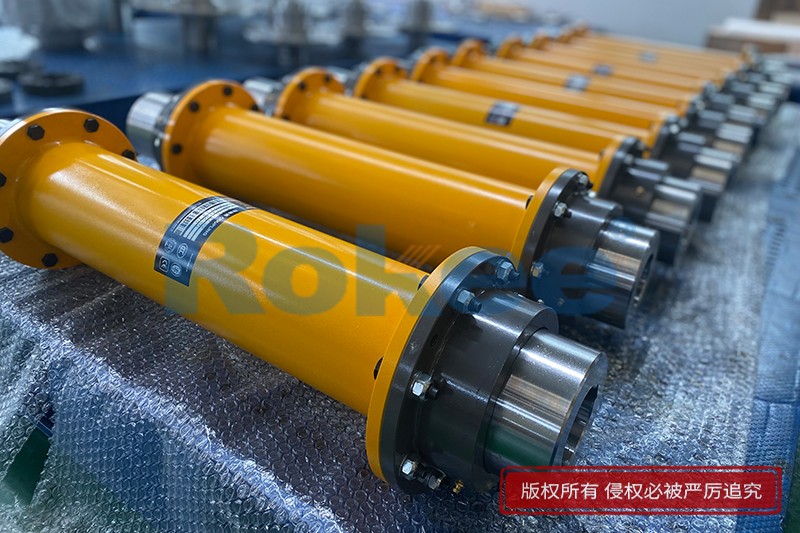
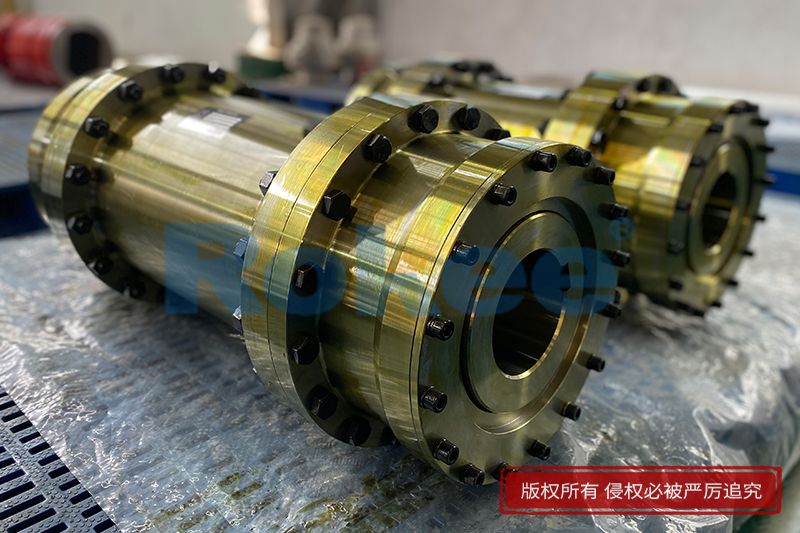
Crown Gear Coupling can be applied into various general drive sites. Due to the special hook face drum gear design, in the definitive deviation scope, Crown Gear Coupling can effectively avoid the edge stress concentration at tooth meshing, so Crown Gear Coupling has outstanding radial and angular centering capacity. Moreover, Crown Gear Coupling can ensure long service life.
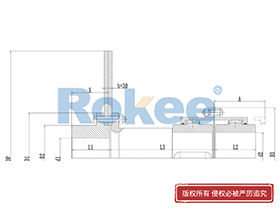
![RODX Drum Gear Coupling,Crown Gear Couplings]()
RODX Drum Gear Coupling
Intermediate Connecting Shaft
RODX Drum Gear Coupling is an extended type of ROD series coupling with a floating shaft design in the middle, suitable for increasing transmission distance.View More![RODP Drum Gear Coupling,Crown Gear Couplings]()
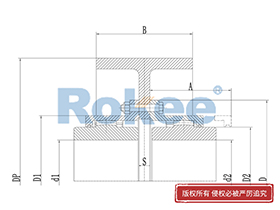
RODP Drum Gear Coupling
With Brake Discs
The RODP Drum Gear Coupling is a type of ROD series coupling with a brake disc, suitable for transmission situations where braking needs to be used in conjunction with disc brakes.View More![RODF Drum Gear Coupling,Crown Gear Couplings]()
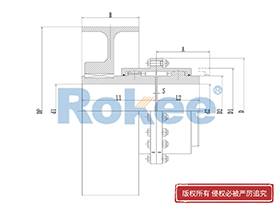
RODF Drum Gear Coupling
Split Type, Brake Disc
The RODF Drum Gear Coupling is a type of ROD series coupling with split brake discs, suitable for transmission situations where there is braking demand and the braking position changes when used in conjunction with disc brakes.View More![RODW Drum Gear Coupling,Crown Gear Couplings]()
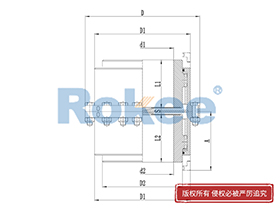
RODW Drum Gear Coupling
With Brake Wheel
The RODW Drum Gear Coupling is a type of ROD series coupling with brake wheels, suitable for transmission situations where braking needs to be used in conjunction with wheel brakes.View More![RODU Drum Gear Coupling,Crown Gear Couplings]()
RODU Drum Gear Coupling
With Brake Wheel
The RODU Drum Gear Coupling is another type of ROD series coupling with brake wheels, suitable for transmission situations where braking needs to be used in conjunction with wheel brakes and applied to one end of the axle, achieving smoother and more reliable braking performance.View More![RODV Drum Gear Coupling,Crown Gear Couplings]()
RODV Drum Gear Coupling
Vertical Installation
The RODV Drum Gear Coupling is a vertical installation type of the ROD series coupling, suitable for transmission situations that require vertical transmission torque.View More![RODM Drum Gear Coupling,Crown Gear Couplings]()
RODM Drum Gear Coupling
Torsion Protection
The RODM Drum Gear Coupling is a torque setting form of the ROD series coupling. By adjusting relevant components, the maximum transmission torque can be easily set within a certain range. Suitable for shafting transmission situations that require safe torque operation to protect important machine components from excessive damage.View More![GICL Drum Gear Coupling,Crown Gear Couplings]()
GICL Drum Gear Coupling
Wide
GICL Drum Gear Coupling has larger inner teeth width, which can transfer torque while compensating for larger axial displacement.View More![GICLZ Drum Gear Coupling,Crown Gear Couplings]()
GICLZ Drum Gear Coupling
Connected to Intermediate Shaft
Half of the GICLZ Drum Gear Coupling adopts a non-toothed semi-coupling sleeve structure, which is usually connected in pairs or used in occasions with small angular displacement.View More![GIICL Drum Gear Coupling,Crown Gear Couplings]()
GIICL Drum Gear Coupling
Narrow
GIICL Drum Gear Coupling has small inner teeth width, which can transfer torque while compensating for small axial displacement. Also, its structure is compact and the moment of inertia is low.View More![GIICLZ Drum Gear Coupling,Crown Gear Couplings]()
GIICLZ Drum Gear Coupling
Connected to Intermediate Shaft
Half of the GIICLZ Drum Gear Coupling adopts a non-toothed semi-coupling sleeve structure, which is usually connected in pairs or used in occasions with small angular displacement. Also, its structure is compact and the moment of inertia is low.View More![GCLD Drum Gear Coupling,Crown Gear Couplings]()
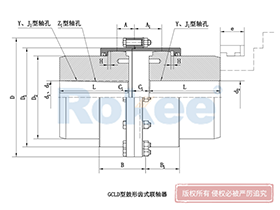
GCLD Drum Gear Coupling
Motor Shaft Extension
GCLD Drum Gear Coupling is generally used for direct connection with the motor, so it generally has a higher speed and compact structure.View More![NGCL Drum Gear Coupling,Crown Gear Couplings]()
NGCL Drum Gear Coupling
With Brake Wheel
NGCL Drum Gear Coupling is designed with a brake wheel, suitable for situations where braking is required.View More![NGCLZ Drum Gear Coupling,Crown Gear Couplings]()
NGCLZ Drum Gear Coupling
With Brake Wheel
NGCLZ Drum Gear Coupling is designed with a brake wheel, suitable for situations where braking is required. Half of its structure adopts a semi-coupling sleeve design, with smaller angular displacement compensation but more stable braking.View More![WG Drum Gear Coupling,Crown Gear Couplings]()
WG Drum Gear Coupling
Basic
The overall characteristics of WG Drum Gear Coupling are similar to those of other drum gear couplings, but with a larger modulus design, which can generally transmit greater torque.View More![WGZ Drum Gear Coupling,Crown Gear Couplings]()
WGZ Drum Gear Coupling
With Brake Wheel
WGZ Drum Gear Coupling is designed with a brake wheel, suitable for shoe type braking.View More![WGP Drum Gear Coupling,Crown Gear Couplings]()
WGP Drum Gear Coupling
With Brake Discs
WGP Drum Gear Coupling is designed with a brake disc, suitable for disc type braking.View More![WGT Drum Gear Coupling,Crown Gear Couplings]()
WGT Drum Gear Coupling
Intermediate Connecting Pipe
WGT Drum Gear Coupling is designed with indirect tube, suitable for long distance torque transfer.View More![WGC Drum Gear Coupling,Crown Gear Couplings]()
WGC Drum Gear Coupling
Vertical Installation
WGC Drum Gear Coupling is specially designed for situations where vertical transmission is required, suitable for some vertical transmission systems.View More![WGJ Drum Gear Coupling,Crown Gear Couplings]()
WGJ Drum Gear Coupling
Connected to Intermediate Shaft
WGJ Drum Gear Coupling is designed with intermediate shaft, suitable for long distance torque transmission, and some are equipped with axial buffers.View More
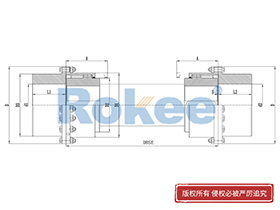
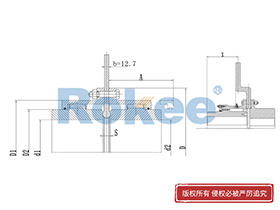
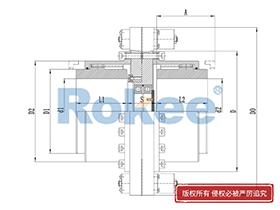
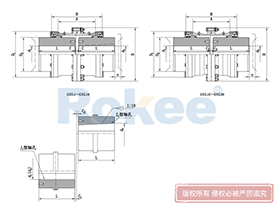
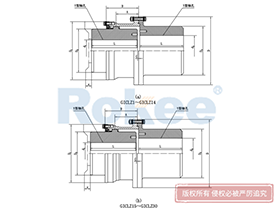
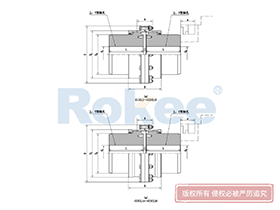
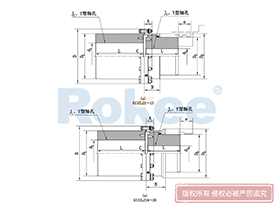
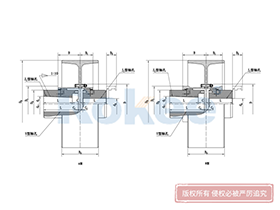
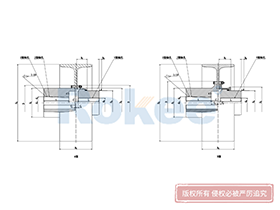
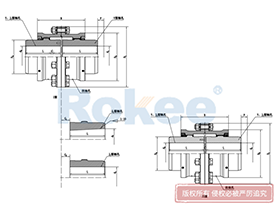
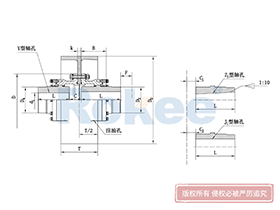
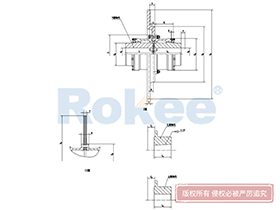
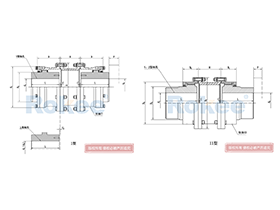
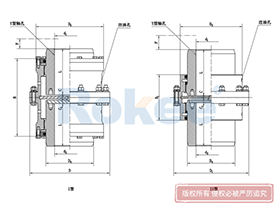
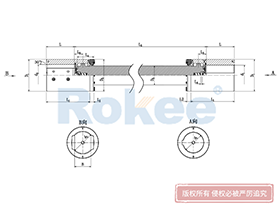
In the realm of mechanical power transmission, couplings serve as critical components that bridge rotating shafts, ensuring the efficient transfer of torque while accommodating inevitable misalignments. Among the diverse range of coupling types, crown gear couplings stand out for their exceptional ability to handle heavy loads, high speeds, and significant shaft misalignments, making them indispensable in numerous industrial sectors. Characterized by their unique crowned tooth profile, these couplings offer a combination of torsional stiffness, load-bearing capacity, and operational reliability that few other coupling designs can match.
1. Fundamental Design Principles of Crown Gear Couplings
Crown gear couplings are a type of flexible gear coupling specifically engineered to address the challenges of torque transmission between misaligned shafts. Unlike standard straight-tooth gear couplings, which require precise alignment to avoid edge contact and premature wear, crown gear couplings feature a specialized tooth geometry that enables them to adapt to various forms of misalignment. The core design components of a typical crown gear coupling include crowned tooth hubs, internal straight-tooth flanges, connecting bolts, sealing devices, and lubrication ports.
The defining feature of crown gear couplings is the crowned profile of the external teeth on the hubs. These teeth are machined into a spherical or drum-shaped curvature, with the center of the sphere aligned along the axis of the gear hub. This curvature is not arbitrary; it is meticulously calculated to ensure optimal contact with the internal straight teeth of the mating flanges. The internal flanges, which are connected to the driven and driving shafts, feature straight teeth that mesh seamlessly with the crowned teeth of the hubs. The two flanges are secured together using high-strength bolts, forming a rigid connection that maintains the integrity of the coupling during operation.
Sealing devices, typically O-rings integrated into the sleeve components, play a crucial role in preventing the ingress of dust, debris, and moisture into the gear meshing area. This protection is essential for maintaining the performance of the lubricant and extending the service life of the coupling. Lubrication ports are strategically positioned on the flanges to facilitate the injection of grease, which reduces friction between the meshing teeth and minimizes wear. The choice of material for crown gear couplings is primarily forged steel, selected for its high strength, durability, and resistance to fatigue—properties that are vital for withstanding the heavy loads and harsh operating conditions common in industrial applications. Some specialized designs may use alloy steels to enhance corrosion resistance or temperature tolerance, depending on the specific application requirements.
Crown gear couplings are available in various configurations to suit different industrial needs. Common variants include basic types with full-tooth flanges for maximum torque transmission, compact designs with reduced tooth width for applications with space constraints, and specialized models equipped with brake wheels or discs for systems requiring braking functionality. Additionally, there are designs optimized for vertical mounting, long-distance torque transmission with intermediate shafts, and direct motor connection, each tailored to address specific operational challenges.
2. Working Mechanism and Misalignment Compensation
The working principle of crown gear couplings revolves around the efficient transfer of torque through meshing gear teeth, while simultaneously accommodating three types of shaft misalignment: angular, radial, and axial. Torque transmission begins when the driving shaft imparts rotational force to the connected crowned tooth hub. This force is then transferred through the meshing of the crowned teeth with the internal straight teeth of the flange, which in turn drives the driven shaft. The torsional stiffness of the coupling ensures that minimal torque loss occurs during this transfer, making crown gear couplings ideal for applications requiring precise power transmission.
The key advantage of the crowned tooth design lies in its ability to compensate for misalignment. In angular misalignment, where the two shafts are not collinear but intersect at a point, the spherical curvature of the crowned teeth allows for smooth meshing with the internal flanges. The contact point between the crowned teeth and the straight teeth adjusts dynamically as the shafts rotate, ensuring that the load is distributed evenly across the tooth surface rather than concentrating at the edges—a common issue with straight-tooth couplings that leads to premature wear.
For radial misalignment, where the shafts are parallel but offset from each other, the crowned tooth profile provides the necessary flexibility to maintain consistent meshing. The curvature of the teeth creates a larger contact area that can adapt to the radial offset without compromising torque transmission. Axial misalignment, which occurs when the shafts move along their axial direction, is accommodated by the sliding capability of the crowned teeth within the internal flanges. The spherical design allows the teeth to slide freely along the axial direction without digging into or gouging the mating teeth, ensuring smooth operation even as the shafts shift position.
Another critical aspect of the working mechanism is the role of lubrication. The meshing teeth operate under high pressure, and without proper lubrication, friction and wear would significantly reduce the coupling's service life. Grease injected through the lubrication ports forms a protective film between the tooth surfaces, reducing friction and dissipating heat generated during operation. The sealing devices ensure that this lubricant remains in place, preventing contamination and maintaining its effectiveness over time.
3. Performance Characteristics of Crown Gear Couplings
Crown gear couplings are renowned for their exceptional performance characteristics, which make them suitable for some of the most demanding industrial applications. One of their primary strengths is their high torque density—they can transmit large amounts of torque relative to their size, making them compact and efficient. Torque capacities of crown gear couplings can exceed 1,000,000 in-lbs for standard designs, with specialized models capable of handling even higher torques up to 5,040,000 Nm. This high torque capacity makes them ideal for heavy-duty equipment such as rolling mills, crushers, and large pumps.
Torsional stiffness is another key performance attribute. Crown gear couplings maintain a high degree of torsional rigidity, ensuring that the rotational motion of the driving shaft is transmitted accurately to the driven shaft. This rigidity is crucial in applications where precise speed control and torque transmission are essential, such as in power generation and precision manufacturing equipment. Despite their torsional stiffness, the crowned tooth design provides the necessary flexibility to accommodate misalignments, striking a balance between rigidity and flexibility that is difficult to achieve with other coupling types.
Crown gear couplings also exhibit excellent high-speed performance. Specialized high-speed designs, with weight-optimized flanges and hubs, can operate at speeds up to 20,000 rpm, making them suitable for applications such as steam turbine generators, gas turbines, and high-speed compressors. The dynamic balance of these couplings is critical for high-speed operation, as any imbalance would cause excessive vibration and potential equipment failure. Properly balanced crown gear couplings ensure smooth operation even at maximum rotational speeds.
The operating temperature range of crown gear couplings is typically between -10°C and +80°C for standard designs, allowing them to function reliably in a wide range of industrial environments. This temperature tolerance can be extended with specialized materials and lubricants, enabling their use in extreme conditions such as high-temperature petrochemical processes or cold outdoor mining operations.
Durability and long service life are additional hallmarks of crown gear couplings. The combination of forged steel construction, optimal tooth contact, and effective lubrication minimizes wear and fatigue, ensuring that the couplings can withstand the rigors of continuous industrial operation. When properly maintained, crown gear couplings can operate for extended periods without significant performance degradation, reducing downtime and maintenance costs for industrial operators.
4. Industrial Applications of Crown Gear Couplings
The exceptional performance characteristics of crown gear couplings make them indispensable in a wide range of industrial sectors, particularly those involving heavy-duty equipment, high speeds, and harsh operating conditions. Below are some of the key industries where crown gear couplings are commonly employed:
4.1 Metallurgical Industry
The metallurgical industry is one of the primary users of crown gear couplings, where they are employed in large-scale equipment such as rolling mills, blast furnaces, and continuous casters. Rolling mills, which process steel and other metals into sheets, bars, and profiles, require couplings that can transmit high torque and accommodate misalignments caused by the heavy loads and thermal expansion of the equipment. Crown gear couplings connect the motors to reducers and the reducers to the rolling mill rolls, ensuring reliable power transmission even under the severe impact loads common in this application. Blast furnaces, used for smelting iron ore, also rely on crown gear couplings to drive the blowers and conveyor systems that keep the furnace operational.
4.2 Mining and Quarrying
Mining and quarrying equipment operates in some of the harshest environments, with high levels of dust, vibration, and potential shaft misalignment. Equipment such as crushers, ball mills, and conveyor systems depend on robust couplings to maintain continuous operation. Crown gear couplings are ideal for these applications due to their high torque capacity, misalignment compensation, and resistance to wear. Crushers, which break down large rocks into smaller particles, subject couplings to significant impact loads, while ball mills, used for grinding ore, require reliable torque transmission at varying speeds. Crown gear couplings ensure that these machines operate efficiently, minimizing downtime in critical mining operations.
4.3 Petrochemical and Chemical Industry
The petrochemical and chemical industry relies on crown gear couplings for equipment such as pumps, compressors, and agitators. These applications often involve corrosive environments, high pressures, and high temperatures, requiring couplings that can withstand these harsh conditions. Crown gear couplings made from corrosion-resistant alloys and equipped with effective sealing devices prevent the ingress of corrosive chemicals and maintain lubrication integrity. Pumps and compressors, used to transfer and compress fluids and gases, require precise torque transmission and reliable operation to ensure the continuity of chemical production processes. Crown gear couplings provide the necessary performance to keep these critical systems running smoothly.
4.4 Power Generation
Power generation facilities, including thermal power plants, nuclear power plants, and wind farms, utilize crown gear couplings in various applications. Thermal power plants use them to connect steam turbines to generators, where high-speed and high-torque transmission is essential. Nuclear power plants rely on the reliability and durability of crown gear couplings to drive auxiliary systems such as coolant pumps. Wind farms employ specialized crown gear couplings optimized for wind turbine applications, which can accommodate misalignments caused by wind load variations and transmit torque from the turbine rotor to the generator. These couplings must operate reliably in outdoor environments, withstanding temperature fluctuations and exposure to the elements.
4.5 Other Industrial Sectors
Crown gear couplings are also used in other industries such as pulp and paper, marine, and railway. In the pulp and paper industry, they drive large rollers and processing equipment, ensuring consistent power transmission for paper production. Marine applications include ship propulsion systems, where couplings must withstand the harsh marine environment and transmit high torque to the propellers. Railway systems use crown gear couplings in traction systems, where they accommodate misalignments between the locomotive's engine and the wheelset, ensuring reliable power transmission for train operation.
5. Installation and Maintenance Guidelines
Proper installation and maintenance are critical to ensuring the optimal performance and long service life of crown gear couplings. Neglecting these aspects can lead to premature wear, reduced performance, and potential equipment failure. Below are key guidelines for the installation and maintenance of crown gear couplings:
5.1 Installation Procedures
Before installation, all components of the coupling should be thoroughly cleaned to remove any dirt, debris, or residual manufacturing oils. This ensures that the mating surfaces and gear teeth are free from contaminants that could cause friction and wear. The shafts should be inspected for straightness and surface defects, as any irregularities can affect the alignment and performance of the coupling.
Proper shaft alignment is one of the most critical installation steps. Crown gear couplings can accommodate misalignments, but excessive misalignment will still lead to increased wear and reduced service life. Axial error should typically be controlled within 0.04 mm, and radial error within 0.08 mm. Professional measuring tools such as dial indicators, level gauges, and laser alignment tools should be used to ensure that the coaxiality accuracy between the two shafts meets the design requirements. The distance between the hubs should be strictly in accordance with the manufacturer's specifications to ensure proper meshing of the teeth.
When mounting the hubs onto the shafts, the correct interference fit should be maintained. For medium to heavy-duty applications, an H7-P6 hub-shaft tolerance and P9 keyway tolerance are recommended to ensure a secure connection. In some cases, heating the hubs may be necessary to facilitate installation, but the heating temperature must be carefully controlled to avoid damaging the material properties of the hubs. Once the hubs are in place, the flanges should be connected using high-strength bolts tightened to the specified torque.
5.2 Lubrication Maintenance
Lubrication is essential for reducing friction between the meshing teeth and preventing wear. The type of lubricant should be selected based on the operating conditions, including temperature, speed, and load. Grease is the most common lubricant used for crown gear couplings, and it should be injected through the lubrication ports until it fills the gear meshing area.
Regular lubrication maintenance is necessary to ensure the effectiveness of the lubricant. Grease should be refilled every 1000 working hours and completely replaced every 5000 working hours. In harsh environments with high levels of dust, moisture, or contamination, more frequent lubrication may be required. The sealing devices should be inspected regularly to ensure they are intact and preventing lubricant leakage and contamination ingress.
5.3 Routine Inspection and Maintenance
Routine inspections should be conducted to check for signs of wear, damage, or misalignment. Visual inspections should be performed regularly to look for worn or chipped teeth, loose bolts, and leakage from the seals. The coupling should also be checked for abnormal vibration or noise during operation, which can indicate misalignment, wear, or lubrication issues.
If any components are found to be severely worn or damaged, they should be replaced promptly to avoid further damage to the coupling or the connected equipment. The alignment of the shafts should be rechecked periodically, as thermal expansion, foundation settlement, or equipment wear can cause misalignment over time.
6. Future Development Trends of Crown Gear Couplings
As industrial technology continues to advance, crown gear couplings are evolving to meet the changing demands of modern mechanical systems. Several key trends are shaping the future development of these couplings:
One of the primary trends is the optimization of tooth geometry through advanced simulation and analysis techniques. Finite element analysis (FEA) and computational fluid dynamics (CFD) are being used to study the contact stress distribution between the crowned teeth and internal flanges, allowing for the design of tooth profiles that minimize stress and maximize load-bearing capacity. Researchers are also exploring the use of three-section arc surfaces for the hub teeth to reduce contact stress and improve performance under large misalignment angles.
Material innovation is another important trend. The development of high-strength, lightweight alloys and composite materials is enabling the design of crown gear couplings that are lighter, more durable, and more corrosion-resistant. These materials can withstand higher temperatures and harsher environments, expanding the range of applications for crown gear couplings. Additionally, the use of surface treatments such as nitriding and carburizing is improving the wear resistance of the gear teeth, further extending the service life of the couplings.
The integration of smart technology is also transforming crown gear couplings. Sensors embedded in the coupling can monitor parameters such as temperature, vibration, and tooth wear in real time, providing valuable data for predictive maintenance. This allows industrial operators to detect potential issues before they lead to equipment failure, reducing downtime and maintenance costs. Smart couplings can also be integrated into industrial Internet of Things (IIoT) systems, enabling remote monitoring and control of the coupling's performance.
Finally, there is a growing focus on energy efficiency and sustainability. Manufacturers are developing crown gear couplings with reduced friction and improved torque transmission efficiency, helping to reduce energy consumption in industrial processes. Additionally, the use of recyclable materials and more efficient manufacturing processes is minimizing the environmental impact of crown gear coupling production.
7. Conclusion
Crown gear couplings are vital components in modern mechanical power transmission systems, offering a unique combination of high torque capacity, torsional stiffness, and misalignment compensation. Their specialized crowned tooth design enables them to operate reliably in some of the most demanding industrial applications, from metallurgical and mining operations to petrochemical and power generation facilities. Proper installation and maintenance are essential to ensuring their optimal performance and long service life, with a focus on shaft alignment, lubrication, and routine inspection.
As industrial technology advances, crown gear couplings are evolving through optimized design, material innovation, and the integration of smart technology, ensuring that they continue to meet the changing needs of modern industry. Their ability to transmit power efficiently and reliably makes them an indispensable part of the global industrial infrastructure, contributing to the smooth operation of critical equipment and processes. By understanding the design, performance, and applications of crown gear couplings, industrial operators can make informed decisions about their use, maximizing the efficiency and reliability of their mechanical systems.
« Crown Gear Couplings » Post Date: 2023/12/26
URL: //5008517517.com/en/tags/crown-gear-couplings.html